
Wholesale Chamomile Essential Oil: A Guide to Buying in Bulk
Buying chamomile essential oil in bulk is a different exercise than picking up a single 10 ml bottle for your nightstand. The stakes are higher, the variables multiply, and a poor sourcing decision can ripple through an entire product line or season's worth of blending work. This guide is written for formulators, small-batch cosmetic brands, spa buyers, and serious hobbyists who are ready to move past retail quantities and want to do it wisely.
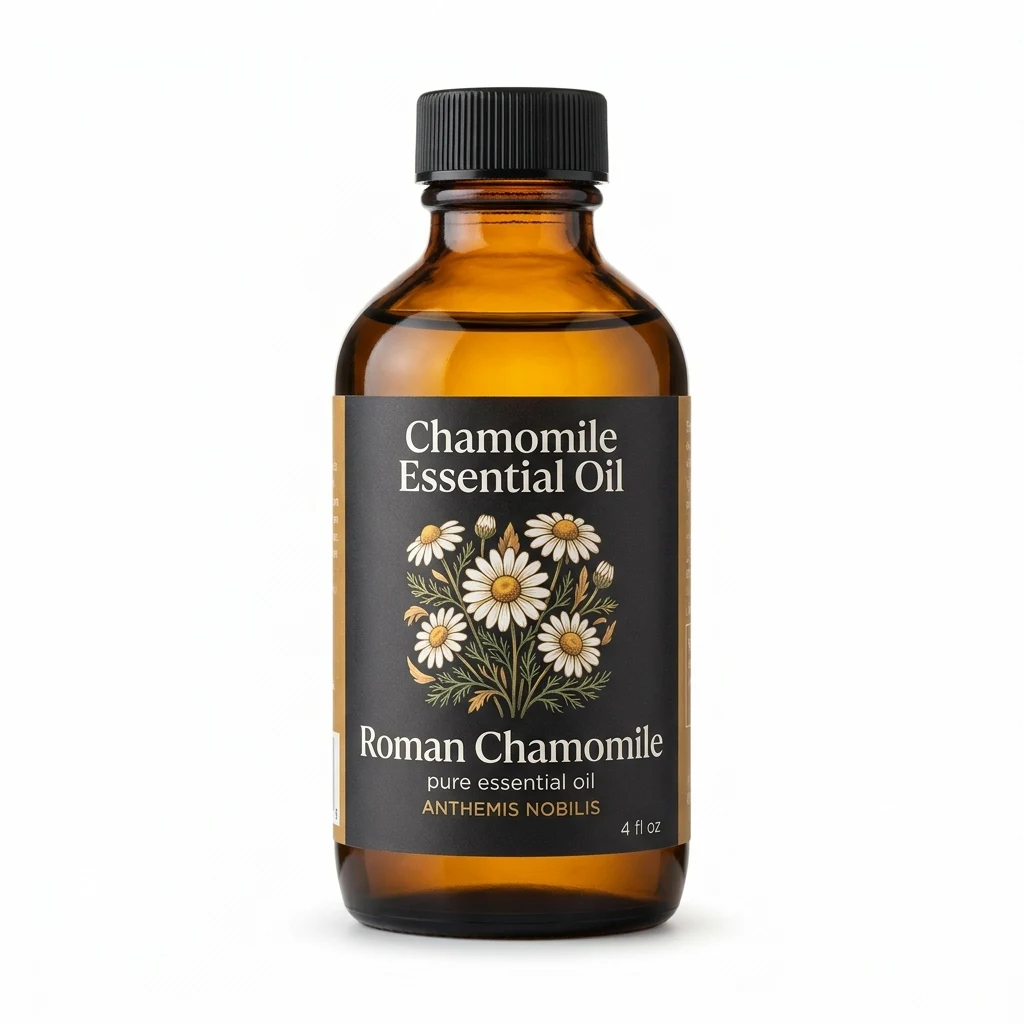
Roman Chamomile Essential Oil
Our own Roman Chamomile Essential Oil, in sizes from 0.5 oz to bulk.
From $32.99
Shop Now →Whether your order is a single kilogram or a full drum, the questions you should ask a supplier remain largely the same. Let's walk through all of them.
Understanding the Two Main Types of Chamomile Oil
Before comparing any bulk chamomile oil listing, you need to confirm which botanical species you are buying. The difference matters enormously for formulation and cost.
- Roman Chamomile (Chamaemelum nobile): A pale yellow to colorless oil with a sweet, apple-like, slightly herbaceous scent. Generally the pricier of the two at wholesale volumes because yields per acre are lower.
- German Chamomile (Matricaria chamomilla or Matricaria recutita): Famous for its deep inky-blue color, produced by the compound chamazulene that forms during steam distillation. Richer, earthier, and more herbaceous in scent profile. Often preferred in cosmetic formulations where the blue pigment is a desirable visual or a marker of quality.
Some listings simply read "chamomile essential oil" without specifying the species. That is your first red flag. Always confirm the Latin binomial before placing a bulk order. For a deeper look at how these two oils differ in character and application, see our complete guide to chamomile essential oil.
Quality Indicators: What to Look For
1. Gas Chromatography / Mass Spectrometry (GC/MS) Testing
A reputable wholesale chamomile oil supplier will provide a GC/MS report for every batch. This document maps the chemical profile of the oil and confirms the presence of key marker compounds. For German chamomile, look for chamazulene (typically 1 to 35 percent depending on origin and process) and alpha-bisabolol oxide. For Roman chamomile, isobutyl angelate and related esters are the primary markers.
Ask for the actual report, not just a summary statement. If a supplier cannot or will not share one, move on.
2. Country of Origin and Cultivation Method
German chamomile is cultivated widely across Eastern Europe, notably Hungary, Bulgaria, Egypt, and parts of India. Roman chamomile production is concentrated in France, England, and Belgium. Origin affects the chemical profile and price. Hungarian-origin German chamomile is widely regarded as a benchmark for chamazulene content.
Ask whether the crop is organically certified, conventionally grown, or wildcrafted. If you are supplying certified organic products, you will need documentation that matches your own certification body's requirements.
3. Extraction Method
Both chamomile species are almost universally steam-distilled at the commercial level. Solvent-extracted absolutes exist for fragrance use, but these are not typically sold as essential oils. Confirm "steam distilled" explicitly. CO2 extraction is also available and produces a richer aromatic profile in some cases, but it commands a significant price premium and is less common at standard wholesale volumes.
4. Color and Clarity
German chamomile should arrive a vivid blue to blue-green. A dull olive or brownish hue in German chamomile may indicate age, poor storage, or adulteration. Roman chamomile should be pale yellow to nearly colorless and clear. Cloudiness in either oil, particularly Roman, may suggest water contamination.
5. Aroma Consistency Across Batches
When you find a supplier whose oil performs well in your formulas, request aroma standards or retain a sample from each batch. Chamomile aroma varies naturally by harvest year and region, but dramatic inconsistency between orders from the same stated origin is worth questioning.
Key Features to Compare When Sourcing Bulk Chamomile Oil
| Feature | What to Ask or Verify |
|---|---|
| Species and Latin name | Confirmed on COA and product spec sheet |
| GC/MS report | Batch-specific, not generic; request on demand |
| Country of origin | Stated per batch, not as a general claim |
| Organic certification | Certifying body named; certificate number available |
| Minimum order quantity (MOQ) | Does it align with your production volume? |
| Packaging options | Aluminum, dark glass, or UN-rated HDPE containers |
| Lead time | In-stock vs. made-to-order; harvest season delays |
| Sample policy | Pre-purchase samples available before bulk commitment |
| SDS (Safety Data Sheet) | Required for shipping, storage, and workplace compliance |
Bulk Chamomile Oil Size Tiers: Matching Volume to Your Needs
Chamomile essential oil bulk sizes typically follow a progression from 100 gram samples up through kilogram, multi-kilogram, and eventually drum quantities. Each tier comes with different pricing logic and storage considerations.
- 100 g to 500 g: Entry-level bulk, ideal for small-batch cosmetic makers or first-time wholesale buyers who want to qualify a supplier before committing further. Price per gram is higher than larger tiers but substantially below retail.
- 1 kg: The most common starting point for serious formulators and indie brands. Most suppliers consider this their standard wholesale unit and price it accordingly.
- 5 kg to 10 kg: Mid-range bulk, typically requiring a drum or large aluminum container. Pricing breaks become meaningful here. Requires proper storage: cool, dark, and away from oxygen exposure.
- 25 kg and above: Commercial or large-production scale. Requires full supplier vetting, stable demand forecasts, and appropriate storage infrastructure.
If you are still working out the right volume for your production schedule, our guide to chamomile essential oil sizes walks through the decision in detail.
Price Tiers: What to Expect at Different Budget Levels
Budget-Tier Wholesale
Prices that seem dramatically lower than the market average for German or Roman chamomile are almost always a signal of adulteration, mislabeling, or poor extraction quality. Chamomile is not an inexpensive oil to produce. German chamomile with legitimate chamazulene content costs significantly more than most "filler" botanicals. Budget suppliers who cannot provide GC/MS reports or who list no Latin binomial should be disqualified immediately.
Mid-Range Wholesale
This is where the majority of reputable bulk chamomile oil suppliers operate. You should expect full documentation, consistent quality, responsive customer service, and a sample program. Organic certification is often available at a modest premium within this tier. This is the appropriate range for most cosmetic formulators and soap makers.
Premium and Specialty Wholesale
Some suppliers specialize in single-origin, small-farm, or high-chamazulene-content German chamomile, or in traditional English-grown Roman chamomile. These command top-tier pricing and are suited to brands whose positioning specifically highlights provenance. CO2 extracts of chamomile also fall here in terms of cost. Premium pricing should always be accompanied by premium documentation.
Red Flags to Avoid
The essential oil wholesale market has its share of unreliable actors. Here is what to watch for before sending payment.
- No Latin binomial on the product listing. This is non-negotiable for any serious purchase.
- "Pure" or "100% natural" without documentation. These are marketing phrases with no regulatory definition. Documentation is what matters.
- Pricing significantly below the known market rate. German chamomile with verified chamazulene content is not cheap. If it appears to be, ask hard questions.
- No sample option before bulk commitment. Any credible supplier will offer samples. Reluctance to do so is worth noting.
- Batch-generic COAs. A certificate of analysis that applies to "all batches" rather than a specific lot number is not a meaningful document for quality assurance.
- Vague origin claims. "Europe" or "imported" is not an origin. Country-specific, and ideally region-specific, is the standard.
- No SDS available. An SDS is a basic safety requirement for any hazardous material shipment and workplace use. Its absence suggests an unprofessional operation.
- Pressure to order large quantities immediately. Legitimate suppliers understand that buyers need to qualify an oil before scaling up.
Where to Buy Wholesale Chamomile Essential Oil
Specialist Essential Oil Wholesalers
Companies that focus specifically on essential oils and aromatic raw materials tend to offer the most transparent documentation and the widest range of botanical origins. They understand the needs of formulators and typically have dedicated wholesale accounts with tiered pricing. Examples in the North American market include Bulk Apothecary, Jedwards International, and New Directions Aromatics. In the UK and Europe, suppliers such as Aromantic and Tisserand Aromatics serve smaller wholesale buyers, while larger commodity traders serve commercial-scale orders.
Direct Farm and Distillery Sourcing
Some operations, particularly in Hungary and Bulgaria for German chamomile, sell directly to international buyers. This route offers the best potential for traceability and relationship-based quality assurance. It typically requires more effort to establish, involves navigating import logistics, and may have higher minimum order requirements. For brands whose story centers on farm-direct sourcing, the investment can be worthwhile.
Online B2B Marketplaces
Platforms such as Alibaba and Made-in-China list chamomile oil from global suppliers. These can be useful for price discovery and finding new sources, but they require extra due diligence. Always request GC/MS reports and samples before committing, and verify supplier credentials independently. Do not rely on platform ratings alone.
For a fuller comparison of purchasing channels and what to expect from each, our guide on where to buy chamomile essential oil online covers the landscape in practical detail.
Storage and Shelf Life Considerations for Bulk Orders
Buying in bulk means managing inventory responsibly. Chamomile essential oil, particularly German chamomile, is relatively stable compared to citrus oils, but it does oxidize over time. Oxidized oil performs poorly in formulas and should not be used in products applied to skin.
General industry guidance places the shelf life of properly stored chamomile essential oil at two to three years from the distillation date, not the purchase date. Always request the distillation or batch date, not just a generic "best by" year.
Store bulk chamomile oil in a cool, dark location, away from temperature fluctuations. Minimize headspace in containers once opened, as oxygen contact accelerates degradation. Aluminum containers with inner liners are preferred at larger volumes; amber glass works well for kilogram quantities and below.
Final Checklist Before You Place a Wholesale Order
- Confirmed Latin binomial for the species you need
- Batch-specific GC/MS report reviewed and acceptable
- Country of origin stated clearly
- Organic certification confirmed if required for your product line
- Sample evaluated for aroma, color, and clarity
- SDS in hand for shipping and storage compliance
- Lead time and stock availability confirmed
- Pricing benchmarked against at least two other reputable suppliers
- Supplier's returns or dispute process understood before purchasing
Sourcing bulk chamomile oil well comes down to documentation, communication, and patience. Suppliers who invest in transparency tend to invest equally in the quality of what they distill and import. Take the time to qualify them before scaling up, and you will build a supply relationship that serves your formulations consistently season after season.