Chamomile Essential Oil: The Complete Guide to a Gentle Botanical Classic
Key Takeaways
- Two distinct species produce chamomile essential oil: Roman chamomile and German chamomile. Each has a different scent profile, color, and chemical composition.
- Chamomile oil is steam-distilled from the flowers of the chamomile plant and is prized in cosmetic, aromatic, and self-care applications.
- The scent is warm, apple-like, and herbaceous. It blends beautifully with lavender, bergamot, clary sage, and sandalwood.
- Always dilute chamomile essential oil in a carrier oil before applying to skin. A standard dilution of 1 to 2 percent is appropriate for most adult topical uses.
- Quality varies significantly between brands. Look for oils with clear Latin names, GC/MS testing, and transparent sourcing.
- Chamomile oil stores best in a cool, dark location in dark glass bottles, away from heat and direct light.
What Is Chamomile Essential Oil?
Chamomile essential oil is a concentrated aromatic extract distilled from the flowers of the chamomile plant. It has been cultivated and appreciated for centuries across Europe, the Middle East, and parts of North Africa, prized for its delicate floral fragrance and its longstanding role in botanical traditions. Today it appears in perfumery, skincare formulations, bath products, candles, and home diffuser blends.
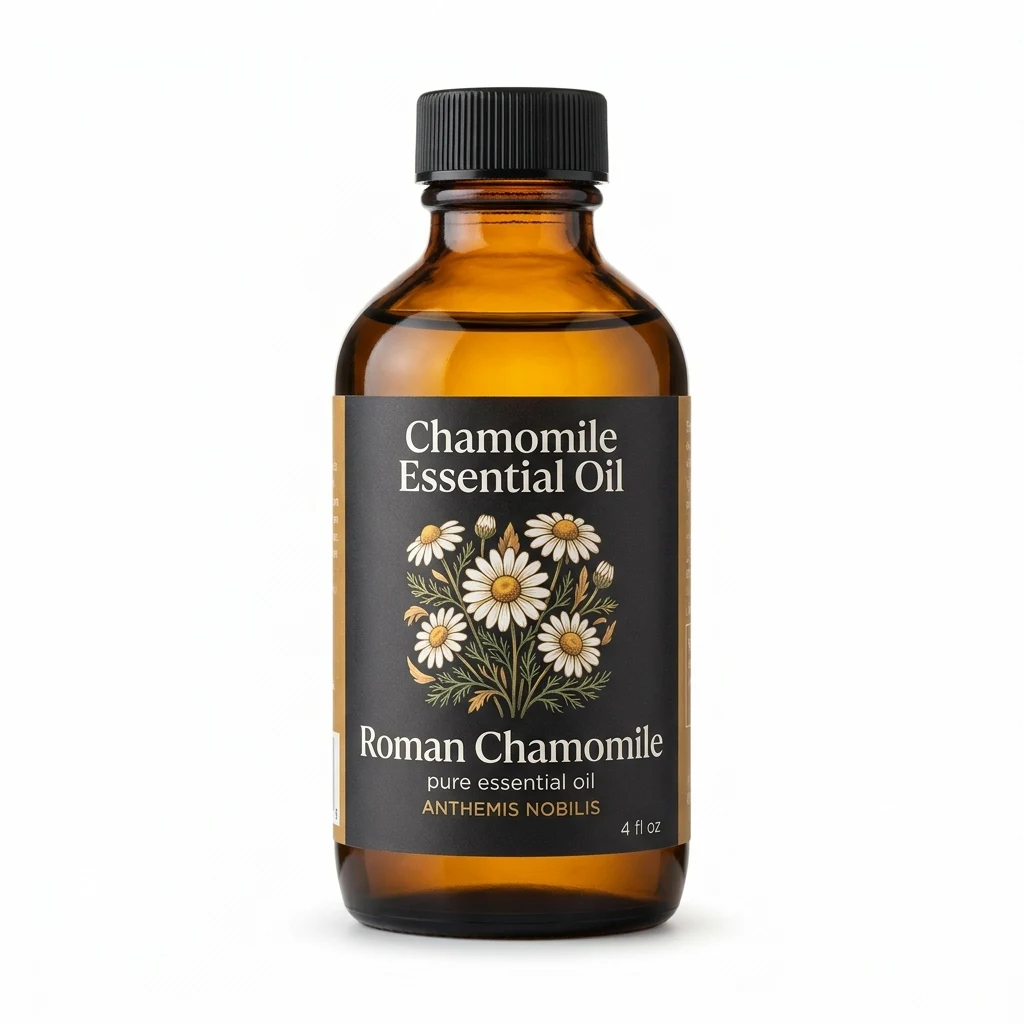
Roman Chamomile Essential Oil
Our own Roman Chamomile Essential Oil, in sizes from 0.5 oz to bulk.
From $32.99
Shop Now →The oil is produced by passing steam through harvested flower heads. As steam moves through the plant material, it carries volatile aromatic compounds with it. When that steam cools and condenses, the essential oil separates from the water layer. What remains is a potent, highly concentrated extract. It takes a remarkable quantity of plant material to produce even a small amount of oil, which is one reason chamomile essential oil tends to sit at a higher price point than many other botanicals.
Unlike chamomile-infused carrier oils (sometimes called chamomile oil in everyday conversation), true chamomile essential oil is not an infusion. It is a pure distillate of aromatic compounds. If you want to explore the infusion method at home, you can learn more in our guide on how to make chamomile oil at home with a simple infusion. The two products have different applications, different concentrations, and very different price points.
Within the category of chamomile essential oil, there are two primary species used in production: Roman chamomile and German chamomile. They share a name and a genus family (both belong to the Asteraceae family), but they differ in meaningful ways. Understanding those differences is the first practical step toward using chamomile oil confidently.
A Brief History of Chamomile as a Botanical
Chamomile's history as a cultivated plant stretches back thousands of years. Ancient Egyptians associated chamomile with the sun and incorporated it into cosmetic and ceremonial preparations. Medieval European herbalists documented it extensively, and it became one of the most recognized plants in the Western herbal tradition. The name itself derives from the Greek words for ground apple, a reference to the plant's low-growing habit and the apple-like quality of its fragrance.
By the time essential oil distillation became a widespread craft in the early modern period, chamomile was among the first botanicals to be extracted this way. Its reputation as a gentle, pleasant-smelling botanical has carried forward into the modern wellness and cosmetics markets with remarkable staying power.
Roman vs. German Chamomile: Understanding the Difference
This is the single most important distinction a chamomile oil buyer needs to understand. Both oils are genuine chamomile essential oils, but they come from different plants, carry different aromatic profiles, and are produced in different growing regions. Using the correct Latin name on a product label is a basic marker of quality and transparency.
Roman Chamomile (Chamaemelum nobile)
Roman chamomile, sometimes labeled by its older Latin name Anthemis nobilis, is a low-growing perennial native to Western Europe. It produces small white daisy-like flowers and is widely cultivated in England, France, Belgium, and Hungary. The essential oil is pale yellow to colorless, with a light, warm, apple-scented fragrance that leans fruity and herbaceous.
Roman chamomile is considered the gentler-smelling of the two. Many perfumers and aromatherapists favor it for blending because it integrates smoothly into formulations without dominating. Its main chemical constituents include esters such as isobutyl angelate and 2-methylbutyl angelate. These ester compounds are largely responsible for its soft, sweet character.
In cosmetic applications, Roman chamomile oil appears in facial serums, body lotions, and aromatic bath products. It is frequently chosen for products aimed at evening routines and for those who prefer a lighter, more delicate scent experience.
German Chamomile (Matricaria chamomilla)
German chamomile, sometimes called blue chamomile, is produced primarily in Germany, Egypt, Hungary, and Eastern Europe. It is an annual plant, taller than Roman chamomile, with similar white flowers. The essential oil, however, looks nothing like its Roman counterpart.
German chamomile essential oil is a deep, vivid blue. That striking color comes from a compound called chamazulene, which forms during the steam distillation process as a breakdown product of matricine present in the flowers. The more chamazulene present, the deeper the blue. This compound is also a significant factor in the oil's cosmetic popularity, particularly in skincare formulations for sensitive or reactive-feeling complexions.
The scent of German chamomile is quite different from Roman. It is warmer, earthier, and more intense, with herbal and slightly sweet notes alongside a distinct blue-green aromatic quality that some people describe as almost tobacco-like or hay-like at high concentrations. It requires a more careful blending hand than Roman chamomile.
German chamomile also tends to be more expensive than Roman chamomile because of the high plant-to-oil ratio required in distillation and the significant commercial demand for its active constituents in the skincare industry.
Moroccan Chamomile: A Third Option
A third species occasionally appears in the market: Moroccan chamomile, or Ormenis multicaulis. Despite the name, it is not closely related botanically to Roman or German chamomile. It is used in perfumery for its warm, herbaceous, slightly powdery scent. If you see it listed, know that it behaves quite differently from the other two and should not be considered an equivalent substitute.
Which Type Should You Choose?
The answer depends on your intended use. For diffusing and aromatic blending where scent is the priority, Roman chamomile tends to be more approachable and universally liked. For cosmetic skin formulations, particularly those targeting sensitive or easily irritated skin, German chamomile is the more commonly selected ingredient because of its chamazulene content. For evening rituals and bath products where both scent and skin contact matter, either can work well, or a thoughtful blend of both can offer a layered aromatic experience.
Scent, Color, and Character
Understanding how chamomile oil smells is genuinely useful, whether you are shopping online or deciding how to incorporate it into a blend. Essential oil scent descriptions can feel abstract or overly romantic, so it helps to break them down into specific notes and honest comparisons.
We have a full dedicated piece on this subject if you want to go deep: what does chamomile essential oil smell like: a full scent profile. Here is the practical summary.
Roman Chamomile Scent Profile
- Top notes: Bright, fresh, slightly fruity. The apple-like quality is most apparent here.
- Heart notes: Soft herbal warmth, hay-like sweetness, gentle floral.
- Base notes: Mild, slightly woody, fading gently without a heavy drydown.
- Overall impression: Light, calming, familiar. Many people describe it as comforting in the way a warm cup of chamomile tea is familiar, though the oil smells distinctly more concentrated and aromatic.
German Chamomile Scent Profile
- Top notes: Sharp, slightly medicinal, intensely herbal.
- Heart notes: Rich, earthy, warm with a distinctive blue-green aromatic character.
- Base notes: Hay-like, slightly sweet, long-lasting.
- Overall impression: Bold and complex. Less immediately approachable than Roman chamomile but highly distinctive in blends when used with restraint.
Color as a Quality Indicator
Color tells you something about an oil's composition and freshness. A bottle of Roman chamomile should be clear to pale yellow. If it has turned brown or has visible cloudiness, that can indicate oxidation or contamination. German chamomile should be a vivid, saturated blue to blue-green. An oil that has faded to a muddy green or murky teal may have degraded. Always check the color of chamomile oil upon purchase if you can, and note any changes over time during storage.
What Is Chamomile Oil Good For? Uses in Cosmetic and Aromatic Routines
Chamomile essential oil has a wide range of practical applications across personal care and home aromatic use. The following uses are rooted in cosmetic, aromatic, and traditional botanical practice, not medical claims. For a broader survey of everyday ideas, see our article on chamomile oil uses: 20 everyday ideas for home and self-care.
Skincare Formulations
German chamomile essential oil, specifically because of its chamazulene content, has become a popular cosmetic ingredient in formulations designed for sensitive, reactive, or delicate complexions. It appears in facial serums, toners, and moisturizers. Formulators often combine it with carrier oils like rosehip, jojoba, or squalane to create a skin-supportive blend that can be applied to the face or body.
Roman chamomile also has a place in skincare, particularly in products intended to create a soothing sensory experience during application. Both oils should be diluted properly before any skin contact, and neither should be applied directly to the skin undiluted.
Some research has looked into the cosmetic constituents of chamomile oils. Chamazulene and alpha-bisabolol, both found in German chamomile, have attracted interest in cosmetic science. Alpha-bisabolol in particular appears frequently as a standalone cosmetic ingredient derived from chamomile. Some research suggests that these compounds may support the appearance of calm, comfortable skin. These are cosmetic observations, not medical findings, and results can vary.
Hair and Scalp Products
Roman chamomile essential oil has a long traditional association with hair care, particularly for lighter hair tones. It appears in shampoos, conditioners, and scalp serums. Many people report that chamomile-infused hair products lend a pleasant, subtle scent to the hair and may support the appearance of shine. The oil is typically used at low concentrations in rinse-off formulations.
Aromatic Diffusing
Diffusing chamomile oil is one of the most popular ways to bring its scent into a living space. Roman chamomile diffuses beautifully on its own or as part of a blend. A few drops in an ultrasonic diffuser can fill a room with its warm, apple-floral fragrance and contribute to a calm home atmosphere.
For curated blend ideas, our article on 5 chamomile diffuser blends for a calm home atmosphere offers ready-to-use starting points with suggested ratios.
Bath and Body Rituals
Chamomile oil adds a beautiful aromatic layer to bath rituals. A few drops mixed thoroughly into a tablespoon of full-fat milk, Epsom salt, or an unscented bath oil (never added directly to water, where the undiluted oil will float on the surface and contact skin at full concentration) can create a fragrant, skin-nourishing soak.
Body oils and lotions featuring chamomile are especially popular for evening routines. The soft warmth of the scent makes it a natural fit for wind-down rituals before sleep. For a full guide on building that kind of routine, see our piece on chamomile oil in your evening wind-down routine.
Massage Oils
Chamomile essential oil diluted in a carrier such as sweet almond, fractionated coconut, or jojoba oil makes a pleasant massage blend. A 1 percent dilution (roughly 6 drops per ounce of carrier) is appropriate for most adults using it over a large area. The fragrance during massage contributes to a calm, grounding sensory experience. People commonly report a feeling of ease and comfort during chamomile-scented massage sessions.
Candle and Fragrance Blending
Chamomile oil appears in artisan candle making and room fragrance products. Its scent blends readily with vanilla, sandalwood, and soft citrus notes to create warm, inviting home fragrance. Because essential oils behave differently in wax compared to fragrance oils, candle makers who use chamomile essential oil should test their formulations carefully for scent throw and stability.
Linen and Home Sprays
A simple linen spray made with distilled water, a small amount of alcohol (to help the oil disperse), and a few drops of Roman chamomile oil can be misted onto pillowcases, bed linens, or room textiles. This is a popular bedtime ritual for those who appreciate falling asleep surrounded by a soft botanical fragrance.
Blending Chamomile Oil: Notes, Partners, and Ratios
Chamomile essential oil sits in the middle register of aromatic classification. Roman chamomile is generally considered a middle note (sometimes listed as a top-to-middle note because of its brighter opening). German chamomile is a deep middle note with a strong aromatic presence that can push toward a base character at high concentrations. Both oils blend well across a wide range of aromatic partners.
Best Blending Partners for Roman Chamomile
| Oil | Note | How It Pairs |
|---|---|---|
| Lavender (Lavandula angustifolia) | Middle | The classic pairing. Soft and balanced, each oil supports the other without competing. |
| Bergamot (Citrus bergamia) | Top | Bergamot's citrus brightness lifts the apple-floral sweetness of Roman chamomile beautifully. |
| Clary Sage (Salvia sclarea) | Middle-Base | Earthy and slightly herbal, clary sage grounds the blend without overpowering chamomile's delicacy. |
| Sandalwood (Santalum album or S. spicatum) | Base | Adds creamy, woody depth. A classic fixative that extends the chamomile note in the drydown. |
| Geranium (Pelargonium graveolens) | Middle | Rosy, green, and slightly sharp. Adds complexity and a fresh dimension to chamomile blends. |
| Ylang Ylang (Cananga odorata) | Middle-Base | Intensely floral. Use sparingly (1 drop to 3 or 4 of chamomile) to avoid overpowering the blend. |
| Frankincense (Boswellia sacra) | Base | Resinous and slightly citrusy on opening, then deeply woody. Pairs elegantly with Roman chamomile in ritual blends. |
Best Blending Partners for German Chamomile
German chamomile requires a more restrained hand in blending because of its strong, earthy presence. Use it at lower percentages within a blend, typically 5 to 10 percent of the total aromatic portion, and build other notes around it.
- Lavender: Softens and smooths the more intense character of German chamomile.
- Cedarwood: Woody warmth that complements the earthy, herbal quality.
- Rose absolute: A luxurious combination used in high-end cosmetic formulations. Rose softens the intensity and adds feminine floral depth.
- Vetiver: Deeply earthy and smoky, this pairing is for grounding blends where German chamomile's boldness fits naturally.
Simple Blend Formulas to Try
Calm Evening Diffuser Blend
- 3 drops Roman chamomile
- 3 drops lavender
- 2 drops bergamot (bergapten-free for safer aromatic use)
Skincare Serum Base
- 1 ounce jojoba oil
- 4 drops German chamomile
- 2 drops lavender
- 2 drops frankincense
Safety note: Patch test before full application. See dilution guidance in the safety section below.
Bath Oil Blend (per tablespoon of carrier)
- 1 tablespoon sweet almond oil
- 2 drops Roman chamomile
- 2 drops lavender
- 1 drop clary sage
Safety note: Mix thoroughly into carrier before adding to bath. Do not add essential oils directly to bathwater.
How to Choose a Quality Chamomile Essential Oil
The essential oil market is largely unregulated, and chamomile in particular is subject to adulteration and mislabeling because of its relatively high price point. Knowing what to look for can protect both your money and your experience.
What the Label Should Tell You
A trustworthy chamomile essential oil label should include all of the following:
- Full Latin (botanical) name: Either Chamaemelum nobile (Roman) or Matricaria chamomilla (German). A label that simply says "chamomile oil" without specifying species is a red flag.
- Country of origin: Tells you where the plant was grown and distilled. Common origins include England, France, Hungary, Bulgaria, Egypt, and Morocco.
- Plant part used: Flowers. If this is not specified, ask the supplier.
- Extraction method: Steam distillation.
- Batch or lot number: Indicates that the company tracks individual production runs.
- Expiration or best-by date.
GC/MS Testing: The Gold Standard
Gas chromatography/mass spectrometry (GC/MS) testing is the most reliable method for verifying the chemical composition of an essential oil. A reputable supplier should either publish GC/MS reports on their website or provide them on request for each batch of oil they sell. These reports confirm that the oil contains the chemical constituents expected for its species and that no adulterants or synthetic compounds have been added.
For German chamomile, a GC/MS report should show measurable chamazulene content. The percentage can vary by harvest and growing conditions, but its presence is a basic marker of authenticity. For Roman chamomile, the report should show the characteristic ester-dominant composition.
Price as a Quality Proxy
Genuine chamomile essential oil is not cheap. Roman chamomile typically runs between $15 and $35 for a 5 ml bottle from reputable suppliers, with some premium single-origin options going higher. German chamomile can run $20 to $50 or more per 5 ml depending on chamazulene content and sourcing.
If you encounter a very large bottle of "pure chamomile essential oil" for a few dollars, approach it with skepticism. It is almost certainly adulterated, diluted in a carrier without disclosure, or made from a different species entirely. Price alone does not guarantee quality, but a price far below market norms almost always signals a problem.
Reputable Supplier Characteristics
- Transparent about sourcing, including farm or distiller relationships where possible.
- Publishes GC/MS reports publicly or shares them freely on request.
- Uses dark glass bottles (amber or cobalt blue) to protect oil from light degradation.
- Provides clear labeling with full botanical names and batch information.
- Does not make health or medical claims about their products.
- Has a return or satisfaction policy that reflects confidence in their product quality.
Understanding Organic Certification
Certified organic chamomile essential oils are available and may be worth seeking out if chemical-free cultivation is a priority for you. In the United States, USDA organic certification means the plant was grown without synthetic pesticides or fertilizers. In Europe, various national and international certifications apply. Organic certification adds a layer of reassurance about agricultural practices, but it does not by itself guarantee superior aroma or chemical composition. An organic oil still needs GC/MS verification to confirm purity and authenticity.
Safety, Dilution, and Who Should Take Care
Chamomile essential oil is generally considered one of the gentler botanicals in the essential oil world, but "gentle" does not mean "use without caution." All essential oils are concentrated aromatic substances, and proper dilution, storage, and informed use are non-negotiable.
Please note: nothing in this guide constitutes medical advice. Always consult a qualified healthcare provider with questions about your individual health circumstances.
Dilution Guidelines for Topical Use
The following dilution rates are based on guidelines published by organizations including the National Association for Holistic Aromatherapy (NAHA) and the International Federation of Aromatherapists (IFA). These are general cosmetic use guidelines for adults with no known sensitivities.
| Use Case | Recommended Dilution | Drops per 1 oz (30 ml) Carrier |
|---|---|---|
| Face serums and sensitive skin applications | 0.5% to 1% | 3 to 6 drops |
| General body lotion or massage oil | 1% to 2% | 6 to 12 drops |
| Bath oil (blended into carrier before adding to water) | 1% to 2% in carrier | 6 to 12 drops per tablespoon of carrier |
| Diffusing (aromatic use only) | No dilution needed; follow diffuser manufacturer guidelines | 3 to 6 drops per session depending on room size |
Never apply any essential oil directly to skin without dilution. This applies even to oils commonly described as safe, including chamomile. Undiluted application can cause sensitization, a condition in which the skin becomes increasingly reactive to a substance over repeated exposures.
Patch Testing: A Required Step
Before applying any new chamomile essential oil blend to a large area of skin, perform a patch test. Apply a small amount of your diluted blend (not undiluted oil) to the inside of your forearm or the crook of your elbow. Wait 24 hours. If redness, itching, or any discomfort develops, do not use the blend. Discontinue use and allow the area to recover. If you have a known sensitivity to plants in the Asteraceae family (which includes ragweed, chrysanthemums, echinacea, and marigold), consult a healthcare provider before using chamomile oil, as cross-sensitivity is a documented possibility.
Groups Who Should Use Extra Caution
- People pregnant or nursing: Essential oil use during pregnancy is an area where guidance varies, and individual circumstances differ. Consult a qualified healthcare provider before using chamomile essential oil if you are pregnant or breastfeeding.
- Young children: Essential oils are not appropriate for use on or around infants without specific guidance from a healthcare provider. For older children, very low dilutions and careful selection of oils are important. Chamomile is sometimes listed as one of the gentler options for older children, but please seek professional guidance for your specific situation.
- People with known plant sensitivities or atopic skin: Patch test carefully and start at the lowest dilution. Consider consulting a dermatologist.
- People taking prescription medications: Some aromatic compounds may interact with certain medications. Always consult your healthcare provider about adding any new aromatic or botanical product to your routine.
Safe Use Around Pets
Pets, especially cats and small dogs, can be sensitive to essential oils in ways that differ significantly from humans. Diffusing chamomile in a closed room where a pet is confined is not advisable. If you diffuse essential oils in your home, ensure pets can leave the area freely and that the space is well ventilated. Consult a veterinarian before using any essential oil product around or on animals.
Safe Storage Away from Children
Essential oils should always be stored in locations that children cannot reach. The concentrated nature of essential oils means that even a small ingested quantity can cause significant harm. If accidental ingestion occurs, contact Poison Control immediately and seek emergency medical attention. Do not induce vomiting unless directed by medical personnel.
Storage and Shelf Life
Chamomile essential oil, like all essential oils, degrades over time through oxidation, evaporation, and chemical change. Proper storage significantly extends its useful life and preserves the aromatic and cosmetic quality you paid for.
For a comprehensive breakdown of best practices, see our detailed guide on how to store chamomile oil: shelf life, bottles, and freshness. Here is the essential summary.
Expected Shelf Life
- Roman chamomile essential oil: Approximately 2 to 3 years from the distillation date when stored correctly.
- German chamomile essential oil: Similar range, approximately 2 to 3 years. The chamazulene content may degrade over time, causing the characteristic blue color to fade.
These are general estimates. The actual shelf life depends on how carefully the oil was handled before you purchased it, the conditions during shipping, and your storage practices at home.
Storage Best Practices
- Use dark glass bottles. Amber or cobalt blue glass protects the oil from UV light degradation. Never transfer chamomile oil to clear glass or plastic.
- Keep it cool. A consistent cool temperature, around 60 to 68 degrees Fahrenheit (15 to 20 degrees Celsius), is ideal. Some people store essential oils in a dedicated mini-fridge. Avoid storing oils near ovens, sunny windowsills, or other heat sources.
- Minimize air exposure. Tighten caps firmly after each use. Consider purchasing small bottles if you use chamomile oil infrequently, so you are not opening the same bottle repeatedly over years.
- Keep away from direct light. Even indoors, direct sunlight accelerates oxidation. Store oils in a drawer, cabinet, or dedicated storage box.
Signs That Chamomile Oil Has Degraded
- The scent has become flat, sharp, rancid, or noticeably different from when first opened.
- German chamomile has faded from blue to muddy green or gray-brown.
- Roman chamomile has turned visibly darker or cloudy.
- The oil feels thicker or stickier than expected.
- Skin irritation occurs with a dilution that previously caused no reaction. (Oxidized essential oils have increased sensitization potential.)
Oxidized or degraded essential oils should not be used on skin. They can still be used in some non-skin aromatic applications, such as diffusion, though their scent quality will be diminished. When in doubt, replace the bottle.
The Craft of Working with Chamomile Oil
Chamomile essential oil rewards a patient, attentive approach. Because both Roman and German chamomile oils are relatively expensive, using them with intention makes practical sense. Start with small test blends before scaling up any recipe. Keep notes on your experiments: what you used, in what proportions, and how the result smelled and felt. Over time those notes become a personal reference that no article can replicate, because your nose and your routines are specific to you.
The aromatic and cosmetic applications of chamomile oil are genuinely broad. From a face serum designed for delicate skin to a linen spray that makes your bedroom smell like a garden at dusk, from a diffuser blend for a quiet Sunday evening to a bath oil for a slow, candle-lit soak, chamomile shows up across nearly every category of natural personal care. Its reputation has endured across centuries of botanical use, not because of any single dramatic property, but because of its consistent, gentle, quietly beautiful presence.
Good chamomile oil, properly sourced and thoughtfully used, is a worthwhile addition to any botanical collection. Take the time to understand the difference between species, invest in a verified quality product, dilute with care, and let the scent do what it does so well: make a space feel, for a moment, like somewhere you genuinely want to be.