What Does Chamomile Essential Oil Smell Like? A Full Scent Profile
Chamomile essential oil is one of those botanical scents that tends to surprise people the first time they encounter it. Many expect something soft and tea-like. What they often get is far more complex: earthy, fruity, and occasionally a little sharp around the edges. Understanding the chamomile oil scent requires knowing which plant you are working with, how it was distilled, and what chemistry lies beneath the surface.
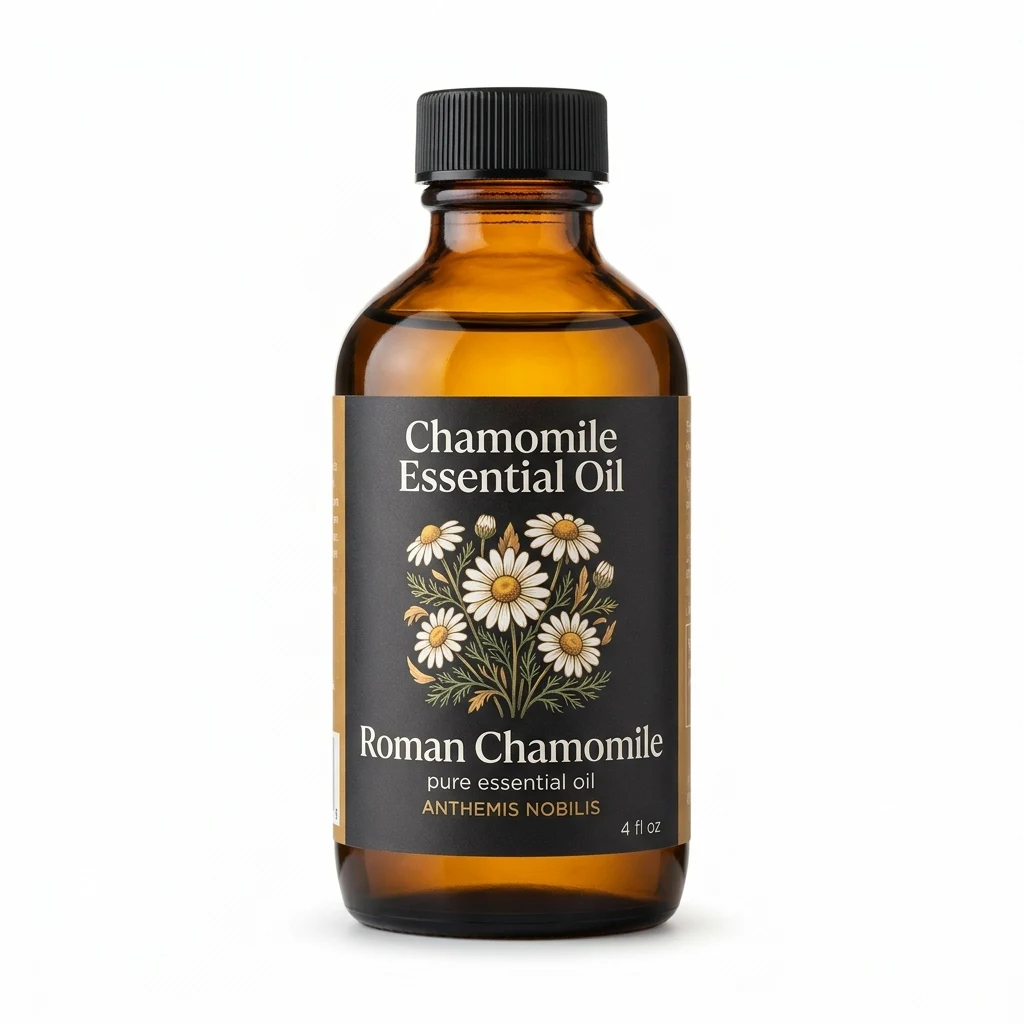
Roman Chamomile Essential Oil
Our own Roman Chamomile Essential Oil, in sizes from 0.5 oz to bulk.
From $32.99
Shop Now →This deep dive unpacks the full chamomile aroma profile from the ground up, starting with the two distinct species most commonly distilled into essential oil, then moving through the specific chemical compounds responsible for those aromatic qualities, and finishing with sourcing and safety considerations worth knowing before you buy.
Two Plants, Two Very Different Scents
The label "chamomile essential oil" covers at least two botanically distinct products. Getting them mixed up is easy. Knowing the difference is genuinely useful.
Roman Chamomile (Chamaemelum nobile)
Roman chamomile essential oil carries a scent that most people find more immediately appealing. It opens with a bright, apple-like fruitiness, sometimes described as warm and slightly honeyed. The dry-down softens into an herbaceous, hay-like quality that feels gentle and familiar. Overall, Roman chamomile reads as lighter, sweeter, and more delicate than its cousin.
This is the variety you are most likely to find in perfumery, self-care blending, and aromatic bath products. Its sweetness makes it easy to work with alongside florals like rose and lavender, or grounding base notes like cedarwood and vetiver.
German Chamomile (Matricaria chamomilla)
German chamomile essential oil is a more assertive experience. The first thing most people notice is the color: a striking deep blue, sometimes called inky blue or midnight teal. That color comes from chamazulene, a compound formed during steam distillation. It is not present in the fresh plant but develops as a chemical reaction during the heating process.
The scent of German chamomile is correspondingly more intense. It is earthy, somewhat musty, and carries a sweet-herbaceous undertone beneath the initial sharpness. Some describe it as medicinal-smelling in the most literal, botanical sense: potent, green, and unmistakably plant-derived. It is less commonly featured in mainstream fragrance blends, though it is widely used in cosmetic formulations where its deep color and distinctive chemistry are valued.
The Chemical Composition Behind the Chamomile Aroma Profile
Scent is chemistry. To understand what chamomile essential oil smells like at a deeper level, it helps to know which compounds are doing the aromatic work.
Key Compounds in Roman Chamomile
Roman chamomile (Chamaemelum nobile) is rich in a group of compounds called esters, particularly isobutyl angelate and 2-methylbutyl angelate. Esters are among the most pleasant-smelling classes of aromatic compounds; they are responsible for the fruity, sweet characteristics found in many florals and fruit-forward essential oils. Research into the chemical composition of Chamaemelum nobile consistently identifies these angelate esters as the dominant fraction, sometimes accounting for more than 75 percent of the total oil composition, depending on the source and distillation method.
Other notable components include pinocarvone, which contributes a slight minty-woody sharpness, and trans-pinocarveol, which adds a subtle green note to the overall profile. The interplay of these compounds is what gives Roman chamomile that characteristic layering: sweet up front, herbaceous underneath.
Key Compounds in German Chamomile
German chamomile (Matricaria chamomilla) has a different compositional story. The dominant compound by reputation is chamazulene, though it is worth noting that chamazulene is typically present at lower concentrations than many people assume, often in the range of five to fifteen percent by volume depending on the origin and quality of the raw material.
More abundant in many German chamomile oils is bisabolol oxide A and bisabolol oxide B, along with alpha-bisabolol itself. These sesquiterpene alcohols contribute to the oil's characteristic earthy, slightly sweet depth. Some research suggests that bisabolol and its oxides may account for a significant portion of the overall aromatic character, particularly the smooth, rounded quality underneath the initial sharp notes.
The chamazulene that gives German chamomile its famous blue color is derived from matricine during the steam distillation process. The higher the chamazulene content, the deeper and more vivid the blue. A pale or yellowish German chamomile oil may indicate either a lower-quality batch, an older oil that has begun to oxidize, or an alternative extraction method.
| Characteristic | Roman Chamomile | German Chamomile |
|---|---|---|
| Primary scent notes | Apple, honey, sweet hay | Earthy, musty, deep herbaceous |
| Color | Pale yellow to clear | Deep blue to blue-green |
| Dominant chemical class | Esters (angelate esters) | Sesquiterpene alcohols (bisabolol group) |
| Notable compound | Isobutyl angelate | Chamazulene |
| Blending character | Light, versatile, easy | Strong, anchoring, niche |
| Common use contexts | Perfumery, self-care, diffusion | Cosmetic formulation, skilled blending |
How the Scent Changes: Distillation, Age, and Dilution
The answer to "what does chamomile essential oil smell like" is not static. A few variables shift the aromatic experience considerably.
Distillation and Extraction Method
Steam distillation is the standard method for both varieties. The temperature and duration of distillation affect which volatile compounds are captured. Shorter distillation runs may produce an oil with a brighter, more top-note-forward character. Longer runs or higher temperatures can push the profile into heavier, more resinous territory.
CO2 extraction, though less common for chamomile, produces an oil (technically a CO2 select) that is often considered closer to the scent of the fresh flower. If you find the steam-distilled version too sharp or diffuse compared to your expectations, a CO2-extracted option may be worth exploring.
Age and Oxidation
Chamomile essential oil, particularly Roman chamomile, contains ester compounds that shift over time. Older oils or improperly stored oils may smell flat, slightly sour, or lose their fruity brightness as the esters degrade. German chamomile's chamazulene can diminish with oxidation, causing the oil to shift from vivid blue toward green or yellowish tones and develop an off-note in the scent profile.
Store both varieties in dark glass bottles, away from heat and light. Shelf life for well-stored chamomile oils is generally estimated at two to three years, though quality indicators in the scent are often your best guide.
Dilution and Skin Contact
Both chamomile varieties smell noticeably different on skin versus on a scent strip or straight from the bottle. Dilution in a carrier oil softens the initial sharp or earthy notes and allows the sweeter, warmer facets to come forward. Roman chamomile especially tends to bloom with warmth, becoming softer and more apple-like when worn. This is worth keeping in mind if your first impression from the bottle is not quite what you were expecting.
Sourcing and Quality Indicators
For a fuller look at sourcing and purchasing, the complete guide to chamomile essential oil covers species identification, certifications, and what to look for on a label. A few scent-specific quality points are worth noting here.
A high-quality Roman chamomile oil should smell distinctly fruity and sweet, with no sharp solvent-like off-notes. If you detect something chemical or flat, that can suggest adulteration or age-related degradation. Adulteration with synthetic esters is a known issue in Roman chamomile; buying from suppliers who provide gas chromatography (GC) or GC/MS (gas chromatography/mass spectrometry) test results is the most reliable way to verify compositional accuracy.
German chamomile quality is most immediately visible: the blue should be rich and saturated. A certified organic designation from a reputable third-party body adds a layer of assurance about the cultivation practices, though it does not by itself guarantee chemical authenticity. Looking for suppliers who specify the country of origin (Egypt, Hungary, and Morocco are established sources for German chamomile; England and France for Roman chamomile) and provide batch-specific testing data is the most practical approach for buyers who care about consistency.
Blending with the Chamomile Scent
Knowing the chamomile aroma profile in detail makes blending more intentional and more successful.
Roman chamomile pairs naturally with lavender, bergamot, clary sage, and rose absolute. Its ester-driven sweetness anchors floral compositions and adds warmth to citrus blends. Use it at low concentrations to start: two to three percent in a carrier oil is often enough to contribute meaningfully without overwhelming a blend.
German chamomile is more of a statement ingredient. Its earthy, blue-tinged depth can ground heavier compositions and adds complexity to wood and root-based blends. It works well with frankincense, sandalwood, and vetiver. Because of its intensity and the potential for its deep color to stain light-colored carrier oils or linens, it is typically used at lower usage rates than Roman chamomile in personal care applications.
For hands-on exploration of how these oils behave in practice, the article on making chamomile oil at home offers a useful starting point for understanding the plant itself before working with the concentrated distillate. And if you are looking for practical contexts where the scent profile can be applied day to day, the collection of 20 everyday chamomile oil uses covers diffusion, personal care, and home applications in detail.
Safety Profile and Contraindications
Both chamomile varieties are generally considered well-tolerated in cosmetic and aromatic use when properly diluted, but there are meaningful contraindications to know.
- Dilution: For leave-on skin applications, a dilution of one to two percent in a carrier oil is a reasonable starting point for most adults. This translates to approximately six to twelve drops of essential oil per one ounce (30 ml) of carrier. Higher concentrations are sometimes used in rinse-off products, but always conduct a patch test before wider application.
- Patch testing: Apply a small amount of diluted oil to the inner forearm and wait 24 hours before broader use. This is especially relevant for anyone with known sensitivities to plants in the Asteraceae family (which includes ragweed, marigold, and chrysanthemum), as cross-sensitivity is possible, though individual responses vary.
- Asteraceae sensitivity: People who experience reactions to other Asteraceae family plants should approach chamomile oils with additional caution and ideally consult a qualified healthcare provider before use.
- Pregnancy and nursing: Consult a qualified healthcare provider before using any essential oil during pregnancy or while nursing.
- Children: Essential oil use with young children requires specific guidance. Consult a qualified healthcare provider for age-appropriate dilutions and safe application methods.
- Oxidized oils: As noted above, degraded or oxidized chamomile oil may present a higher sensitization risk. Do not use oil that has changed color significantly, smells off, or is past its recommended shelf life.
Essential oils are potent botanical concentrates. Proper dilution, patch testing, and consultation with a qualified healthcare provider are the foundation of safe use, not optional extras.
Putting the Scent in Context
The chamomile aroma profile resists easy summary precisely because it depends so much on species, quality, and context. Roman chamomile rewards those who lean toward soft, sweet, and approachable botanical fragrances. German chamomile asks more of the person working with it but offers depth and complexity that few other common essential oils can provide.
What does chamomile essential oil smell like? It smells like chemistry made visible: the esters of a summer meadow, the sesquiterpenes of ancient earth, and the particular alchemy that happens when a steam distiller turns a handful of small white flowers into something worth paying attention to.