Chamomile Essential Oil Sizes: Which Bottle Should You Order First?
Picking the right bottle size feels like a minor detail until you've either run out mid-project or discovered a 4-ounce bottle slowly oxidizing in your cabinet two years later. Chamomile essential oil is one of the more costly botanicals on the market, which means this decision carries real weight. Buy too little and you'll pay premium shipping twice. Buy too much and you risk quality degradation before you reach the bottom.
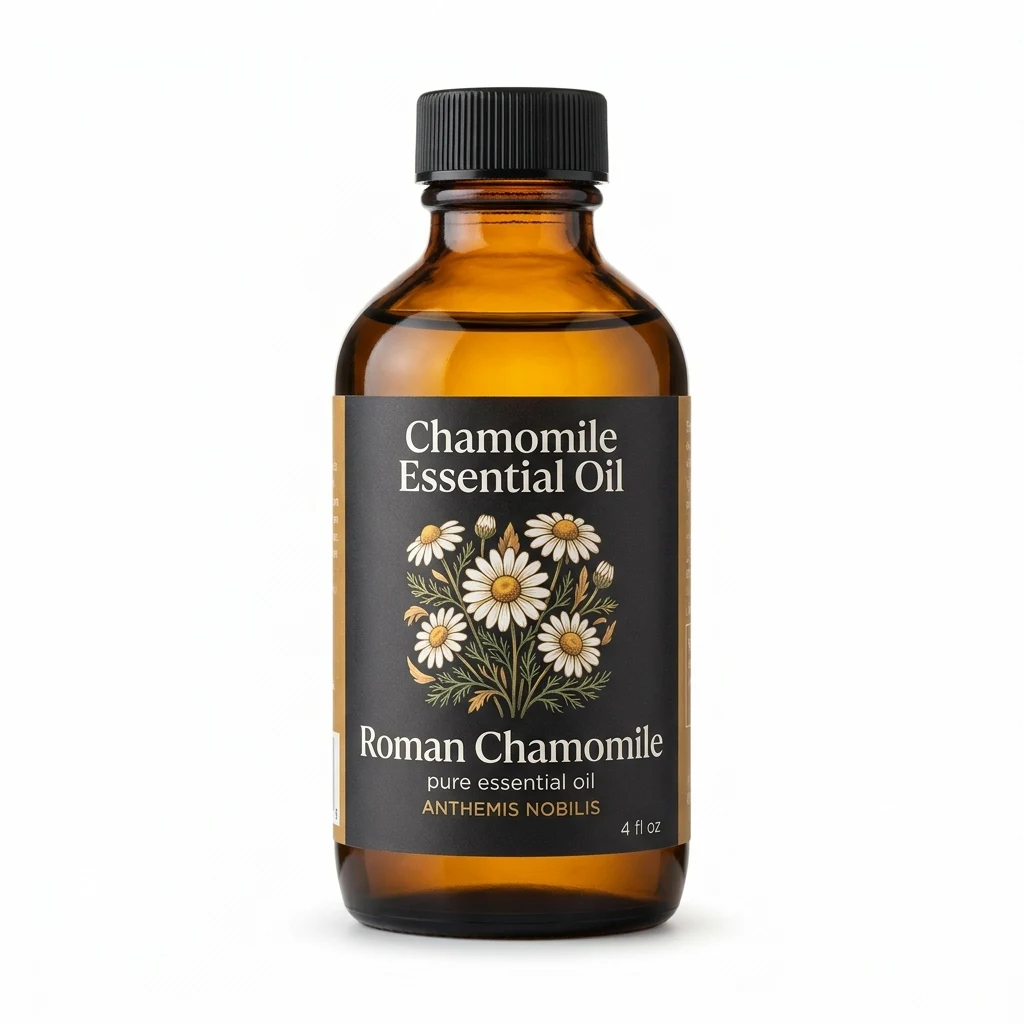
Roman Chamomile Essential Oil
Our own Roman Chamomile Essential Oil, in sizes from 0.5 oz to bulk.
From $32.99
Shop Now →This guide walks through every size tier available, what to look for before you click purchase, and the red flags that signal a product worth skipping. Whether you're stocking a personal aromatherapy shelf or supplying a small cosmetic studio, there's a right entry point for your situation.
Understanding Chamomile Oil Size Options
Chamomile essential oil is sold in a wider range of volumes than most people expect. The common tiers you'll encounter from retail and specialty suppliers break down like this:
| Volume | Best For | Approximate Yield (diffuser fills at 5 drops) |
|---|---|---|
| 2ml / 5ml sample | Scent testing, one-off recipes | 20 to 50 fills |
| 10ml | Regular personal use, small blends | 100 fills |
| 15ml (0.5 oz) | Standard retail bottle, most common entry size | 150 fills |
| 30ml (1 oz) | Moderate users, small-batch cosmetic makers | 300 fills |
| 60ml to 100ml | Active formulators, studio use | 600 to 1,000 fills |
| 4 oz to 16 oz | Wholesale-adjacent, high-volume production | 2,400+ fills |
These yield numbers assume undiluted use. In a carrier-based blend, your chamomile oil stretches considerably further. A 30ml bottle used at a 1% dilution in a 100ml lotion batch, for example, contributes just 1ml of essential oil per batch.
Quality Indicators: What to Look For Before You Buy
Size is secondary to quality. A large bottle of adulterated chamomile oil is a poor investment regardless of the unit price. Here's what distinguishes a trustworthy chamomile essential oil bottle from one that deserves skepticism.
Species Clarity
The label should state the Latin name. Roman chamomile is Chamaemelum nobile (sometimes still listed as Anthemis nobilis). German chamomile is Matricaria chamomilla or Matricaria recutita. These are different oils with different aromatic profiles and compositions. A product listing that says only "chamomile essential oil" without a Latin name is either careless or deliberately vague. Skip it.
GC/MS Testing and Batch Documentation
Gas chromatography/mass spectrometry (GC/MS) testing breaks down the chemical constituents of an oil and confirms it hasn't been cut with synthetic compounds or cheaper carrier oils. Reputable suppliers post batch-specific GC/MS reports, either on their website or available on request. If a company can't produce one, treat that as a significant caution signal.
Country of Origin and Extraction Method
Roman chamomile is most commonly sourced from England, France, and parts of Eastern Europe. German chamomile comes largely from Egypt, Hungary, and Bulgaria. The country of origin affects both the aromatic character and the chemical profile. Steam distillation is the standard extraction method for both species. If a listing says "cold-pressed chamomile essential oil," that's a red flag. Chamomile is not pressed; it's distilled.
Packaging and Light Protection
Every legitimate chamomile essential oil bottle should be amber or cobalt glass. Essential oils degrade with UV exposure, and clear glass offers no protection. Plastic is appropriate only for very large bulk quantities where glass becomes impractical, and even then the interior lining matters. For personal and studio use, glass is the standard.
Botanical Sourcing Transparency
Some suppliers disclose the farm, the distillery, or at minimum the region. This level of traceability signals a company invested in quality control rather than simply reselling from commodity brokers. Organic certification adds another layer of verification, though it's not the only marker of a well-sourced oil.
Key Features to Compare Across Brands
Once you've confirmed basic quality thresholds, these features help you compare specific products head-to-head.
- Dropper insert or orifice reducer: Standard retail bottles include a built-in orifice reducer that controls drop size. Some bulk bottles do not. Know before you pour.
- Cap type: Euro dropper caps and tamper-evident caps both have advantages. Euro droppers allow single-hand dispensing. Tamper-evident caps matter if you're purchasing from a reseller rather than directly.
- Fill date or distillation date: Fresher is better. Roman chamomile has an approximate shelf life of two to three years when properly stored. German chamomile, due to its higher azulene content, can maintain quality slightly longer. A listed fill date helps you calculate remaining viability.
- Aroma profile notes: Reputable sellers describe the scent character. Roman chamomile is warm, apple-like, and softly herbaceous. German chamomile has a deeper, more intensely herbaceous quality with a distinctly blue-green color from its chamazulene content. If the description is vague or sounds copy-pasted from a generic template, that's worth noting.
- Return or satisfaction policy: Given the price point of chamomile oil, a supplier confident in their product will stand behind it. A no-return policy on essential oils is not unusual for safety reasons, but some form of quality guarantee should exist.
Size Recommendations by Use Case
First-Time Buyers
Start with a 5ml or 10ml bottle. At chamomile's price point, this limits your risk while you evaluate the scent and confirm it suits your blending goals. A quality 5ml roman chamomile essential oil bottle from a reputable supplier will give you enough material for several candle blends, a few skincare formulations, or extended diffuser sessions. Once you know you love the oil and trust the supplier, scaling up makes sense.
Regular Personal Use (Diffusing and Skincare)
A 15ml bottle is the classic entry point for good reason. It's the size most retail brands optimize for, which means you're likely to find the widest selection and the most competitive pricing here. For someone who diffuses chamomile a few evenings a week or incorporates it into a monthly skincare batch, a 15ml bottle lasts a meaningful amount of time without risking oxidation.
Small-Batch Cosmetic Formulators
If you're making lotions, balms, or botanical perfumes regularly, a 30ml or 1oz bottle is the practical minimum. At typical cosmetic dilution rates (0.5% to 1% for leave-on products), a 30ml bottle contributes to considerably more product than its size suggests. Some formulators working with roman chamomile specifically keep a 30ml on hand and a small sample bottle for scent testing new combinations.
Studio, Salon, or Small Business Use
Volumes between 60ml and 4oz become relevant when chamomile oil is a regular fixture in your production schedule. At this level, unit price matters and bulk sourcing starts to deliver real savings. Our guide to wholesale chamomile essential oil and bulk buying covers this tier in full, including what minimum order quantities to expect and how to vet wholesale suppliers.
Price Points and What to Expect
Chamomile essential oil, particularly roman chamomile, is one of the more expensive oils in the botanical market. This is a function of yield: it takes an enormous quantity of chamomile flowers to produce a relatively small volume of oil. If a price looks dramatically lower than the market average, something is off.
| Price Range (per 10ml) | What It Signals |
|---|---|
| Under $8 | Very likely adulterated, diluted in carrier oil, or mislabeled species |
| $10 to $18 | Possible for German chamomile; still worth verifying GC/MS data |
| $18 to $35 | Typical for quality German chamomile; low end for roman |
| $35 to $60+ | Expected range for genuine Roman chamomile from traceable sources |
For a deeper look at what drives these price differences and how to evaluate value, the complete guide to chamomile essential oil covers the botanical background, extraction process, and what compositional differences mean for buyers.
Red Flags to Avoid
These patterns appear consistently in lower-quality chamomile oil listings. Learn to spot them quickly.
- "Pure" without documentation: The word "pure" on a label is unregulated. It means nothing without GC/MS data to back it up.
- No Latin name on the label: Already mentioned, but worth repeating. This is a non-negotiable quality signal.
- Uniformly priced across species: If a retailer sells roman chamomile and german chamomile at the same price point, they almost certainly don't have genuine roman chamomile.
- "Chamomile fragrance oil" confusion: Fragrance oils are synthetic or semi-synthetic blends. They are not essential oils. Listings that blur this distinction, whether accidentally or deliberately, should be avoided.
- Suspiciously large bottles at unusually low prices: A 4oz roman chamomile essential oil bottle for $20 is not a deal. It's a warning.
- No company contact information: Legitimate essential oil suppliers make it easy to ask questions about sourcing, testing, and batch data. If a seller has no accessible customer support, that matters.
Where to Buy
The best sources for chamomile essential oil share a few common traits: transparent sourcing, accessible testing documentation, and consistent quality across batch numbers. Direct-to-consumer specialty suppliers typically offer more traceability than general marketplace listings, where third-party sellers may not have direct relationships with distillers.
For a curated breakdown of vetted retailers and what each platform offers in terms of quality control and ordering experience, the guide on where to buy chamomile essential oil online covers current options across price tiers and sourcing standards.
A few practical notes for any purchase channel:
- Order a sample size from any new supplier before committing to a larger chamomile oil bottle.
- Check whether the product page lists a batch number. If it does, request the corresponding GC/MS report before purchase.
- Read the aroma description carefully. If a Roman chamomile listing describes the scent as "floral and fresh" without any mention of the characteristic warm, slightly fruity, herbaceous note, that's a mismatch worth questioning.
- Confirm return and quality guarantee policies before completing your order.
Storage Once Your Bottle Arrives
Even the finest chamomile essential oil bottle will degrade prematurely without proper storage. Keep your oil away from light sources, store it in a cool location (a dedicated essential oil box or a dark cabinet works well), and ensure the cap is fully sealed after each use. Oxygen is the primary enemy of oil longevity. If you've purchased a larger bottle, consider decanting working quantities into a smaller amber bottle and keeping the bulk supply sealed as much as possible.
Properly stored Roman chamomile maintains its aromatic character and compositional integrity for roughly two to three years from distillation. German chamomile, with its stable chamazulene content, often holds up for a similar or slightly extended period. Tracking your fill dates helps you use oldest stock first and avoid the gradual off-notes that come with oxidation.
Your first chamomile purchase doesn't need to be complicated. Start with a verified supplier, choose a size that matches your actual usage, and let the scent itself guide your next order.