
Chamomile Fragrance Oil vs Essential Oil: What Is the Difference?
Walk into any candle shop or browse a soap-making supplier and you will find both chamomile fragrance oil and chamomile essential oil sitting side by side on the shelf. They share a name and a general scent family, but they are fundamentally different products made in completely different ways. Choosing the wrong one for your project can mean wasted money, a disappointing result, or a product that simply does not perform the way you expected.
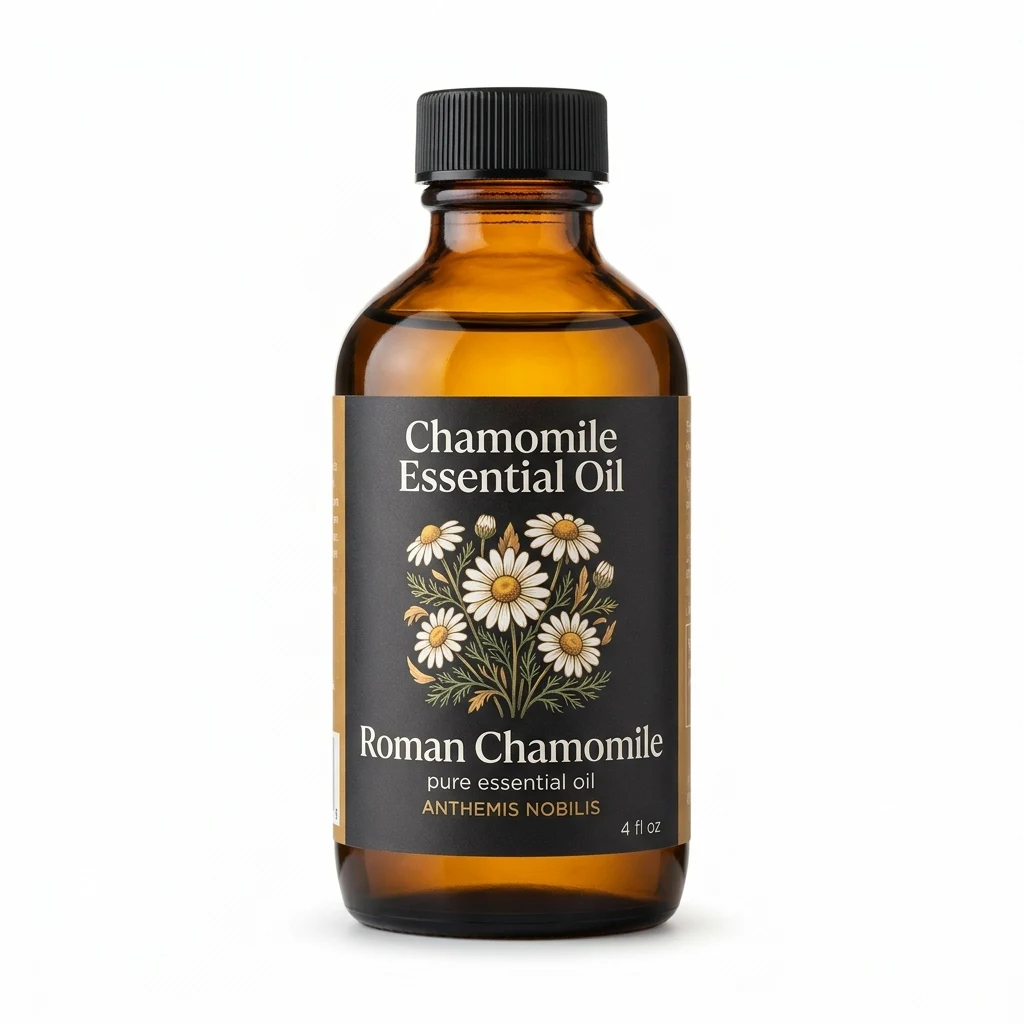
Roman Chamomile Essential Oil
Our own Roman Chamomile Essential Oil, in sizes from 0.5 oz to bulk.
From $32.99
Shop Now →This guide breaks down exactly what separates these two options, where each one genuinely shines, and how to decide which belongs in your cart.
What Is a Chamomile Essential Oil?
Chamomile essential oil is a concentrated botanical extract drawn directly from chamomile flowers, most commonly Matricaria chamomilla (German chamomile) or Anthemis nobilis (Roman chamomile). The extraction process is almost always steam distillation: pressurized steam passes through the plant material, volatilizes the aromatic compounds, and then those compounds are captured and separated from the water. The result is a pure, single-source oil with no synthetic additions.
German chamomile is famously deep blue due to a compound called chamazulene that forms during distillation. Roman chamomile, by contrast, is pale yellow with a softer, more apple-like scent. Both are genuine botanical products with complex aromatic profiles shaped by soil, climate, and harvest timing. That complexity is part of what makes them valuable, and also part of what makes them expensive.
If you want to go deeper on sourcing and quality markers, the complete guide to chamomile essential oil covers botanical varieties, distillation standards, and what to look for on a certificate of analysis.
What Is a Chamomile Fragrance Oil?
A fragrance oil is a blended aromatic product, typically combining synthetic aroma compounds with some percentage of natural essential oils or isolates. The goal is to produce a stable, consistent scent at a lower price point. Fragrance oils are engineered in a lab by perfumers who can hit a very specific aromatic target every single time, batch after batch.
Chamomile fragrance oil does not have to contain any actual chamomile extract. Some do include a percentage of Roman chamomile or German chamomile oil to anchor the scent. Many do not. The label will often describe the scent as "chamomile-inspired" or list the fragrance family rather than the botanical source.
You will also commonly see blended products marketed as lavender chamomile fragrance oil, which pairs a floral chamomile accord with lavender notes. These blends are enormously popular in home fragrance and bath products because the combination reads as soft, clean, and familiar to most consumers.
Side-by-Side Comparison Table
| Attribute | Chamomile Essential Oil | Chamomile Fragrance Oil |
|---|---|---|
| Source | Steam-distilled chamomile flowers | Synthetic aroma compounds, may include some botanicals |
| Scent profile | Complex, earthy, herbaceous, variable by variety and batch | Consistent, often sweeter and more linear than the botanical |
| Cost | High (Roman chamomile especially) | Low to moderate |
| Scent throw in candles | Moderate, can diminish with heat | Strong and reliable |
| Skin use | Yes, when properly diluted in a carrier oil | Use-specific; check supplier's skin-safe rating and IFRA guidelines |
| Diffuser use | Yes | Not recommended for inhalation diffusers |
| Color | Deep blue (German) or pale gold (Roman) | Usually clear or very light yellow |
| Shelf life | 2 to 3 years if stored properly | Often longer due to synthetic stabilizers |
| Batch-to-batch consistency | Varies with harvest conditions | Highly consistent |
| Regulatory transparency | GC/MS testing available from quality suppliers | Ingredient disclosure varies by brand |
Pros and Cons: Chamomile Essential Oil
Pros
- Pure botanical origin. No synthetic aroma compounds. What you smell is what the plant produced.
- Complex, nuanced scent. German chamomile has a rich, slightly medicinal, herbaceous depth that fragrance oils rarely replicate accurately.
- Suitable for skin applications when diluted correctly. Many formulators prefer it for facial serums, body oils, and roll-ons.
- Appropriate for aromatherapy diffusion. Designed for inhalation use in ways that most fragrance oils are not.
- Verifiable quality. A reputable supplier will provide a GC/MS report confirming the oil's purity and constituent profile. Our guide on how to buy pure chamomile essential oil walks through exactly what to check.
Cons
- Expensive. Roman chamomile is one of the costlier essential oils on the market. Even a 5ml bottle can set you back considerably.
- Scent throw in candles is limited. Essential oils often volatilize too quickly or incompletely in wax, producing a weaker scent than most candle makers want.
- Batch variation. Because it comes from an agricultural crop, the aroma can shift from year to year. This matters for anyone creating a product line that needs a consistent signature scent.
- Shorter shelf life. Proper storage (cool, dark, away from air) is essential to prevent oxidation.
Pros and Cons: Chamomile Fragrance Oil
Pros
- Affordable. You get significantly more scent per dollar, which matters when you are producing candles or soaps in volume.
- Reliable scent throw. Formulated specifically for performance in wax, soap bases, and diffuser reeds. The scent behaves predictably.
- Consistent batch to batch. Critical for any maker who sells products and needs every batch to smell identical.
- Wide range of blends. Lavender chamomile fragrance oil, vanilla chamomile, and chamomile citrus are just a few of the popular combinations that would be difficult or prohibitively expensive to recreate with pure botanicals.
- Longer shelf life. Synthetic components are generally more stable over time.
Cons
- Not for diffusers. Fragrance oils contain compounds that are not intended for direct inhalation. Using them in an ultrasonic or nebulizing diffuser is not recommended.
- Synthetic ingredients. If you are marketing a product as "natural" or "clean," a fragrance oil will complicate that claim. Always check with your supplier on what disclosure language is appropriate.
- Variable skin safety. Not all fragrance oils are formulated for leave-on skin products. Always verify the IFRA (International Fragrance Association) compliance certificate and the supplier's recommended usage rate for the specific application.
- Less aromatic complexity. The scent profile is usually flatter and sweeter than a genuine botanical oil. To some noses this is a plus; to others it reads as synthetic.
Fragrance Oil vs Essential Oil: Which Is Right for Your Use Case?
For Candle Making
Fragrance oil wins here, fairly decisively. Chamomile essential oil does not perform reliably in most wax types. The scent throw tends to be weak, and the cost makes high fragrance-load candles impractical. If you are committed to an all-natural candle, blending a small amount of chamomile essential oil with another stronger botanical like Roman chamomile with beeswax can work, but expect the results to be subtle. For most candle makers, a quality chamomile fragrance oil (or a lavender chamomile fragrance oil for a more complex profile) is simply the more practical choice. See our roundup of best chamomile home fragrance picks for candles for tested options.
For Cold-Process and Melt-and-Pour Soap
Fragrance oil again has a performance edge. Essential oils can accelerate trace in cold-process soap or fade during saponification. That said, Roman chamomile essential oil holds reasonably well compared to some botanicals. If your brand positioning centers on natural ingredients, the essential oil is worth experimenting with. For straightforward, reliable results in larger batches, a soap-safe fragrance oil is more forgiving.
For Body Oils, Roll-Ons, and Leave-On Skin Products
Here, chamomile essential oil is generally the better-considered choice for clean beauty formulations, provided it is properly diluted (typically 1 to 2 percent in a carrier oil for facial applications, up to 3 percent for body products). Always perform a patch test before broader use. If you choose a fragrance oil for a leave-on product, you must confirm it carries a skin-safe IFRA rating for that specific product category.
For Diffusers and Room Sprays
For inhalation diffusers, chamomile essential oil is the appropriate option. Fragrance oils are not formulated for this use. For room sprays, a fragrance oil can work well in a water-and-alcohol base, since the product is not being directly inhaled from a device at close range, though you should still check supplier guidance.
For Bath Products
Both can work in rinse-off applications like bath salts or bubble bath, but the rules differ. Essential oils need to be properly dispersed (a solubilizer or carrier prevents undiluted oil from pooling on the skin). Fragrance oils need a rinse-off safety rating. Neither should be added to bath water without appropriate dilution or dispersal.
A Note on the Lavender Chamomile Fragrance Oil Category
It deserves its own mention because the search volume and product category are both significant. Lavender chamomile fragrance oil is one of the most popular home fragrance combinations on the market. The two scents are complementary: lavender brings a clean, slightly sharp floral note, while chamomile adds softness and warmth underneath it.
When you see this blend listed as a fragrance oil, it is almost certainly a synthetic or semi-synthetic accord. When you see it sold as an essential oil blend, look carefully. A genuine blend of Roman chamomile essential oil and lavender essential oil (true Lavandula angustifolia) would carry a significant price. Very inexpensive "lavender chamomile essential oil blends" sometimes contain lavandin rather than true lavender, or synthetic chamomile substitutes. Reading the label and asking for GC/MS documentation protects you.
The Verdict
The choice between chamomile fragrance oil and chamomile essential oil is not really about which one is better in absolute terms. It is about what you are making, who it is for, and what your brand or personal values require.
Choose chamomile essential oil when botanical purity matters, when you are formulating for skin or diffusion use, or when you want the genuine complexity of a plant-derived scent. Accept that you will pay more and plan carefully for consistent sourcing.
Choose a chamomile fragrance oil when you need reliable performance in candles or soaps, when cost and batch consistency are priorities, or when you are looking for a specific scent blend (like lavender chamomile) that would be difficult to achieve affordably with pure botanicals. Vet your supplier carefully, confirm IFRA compliance for your application, and be transparent with your customers about what the product contains.
Both have a legitimate place in a well-stocked maker's studio. Knowing which one belongs in which project is the real skill worth developing.