Roman Chamomile Essential Oil: Aroma, Character, and Everyday Uses
Roman chamomile essential oil occupies a quiet but distinguished place in the world of botanical aromatics. Its scent is soft, apple-sweet, and faintly herbaceous. Its color is pale yellow to almost water-clear. And its chemical profile is genuinely fascinating, built around a family of compounds you won't find quite the same way in any other plant oil. If you've been curious about what actually makes this oil tick, this deep dive is for you.
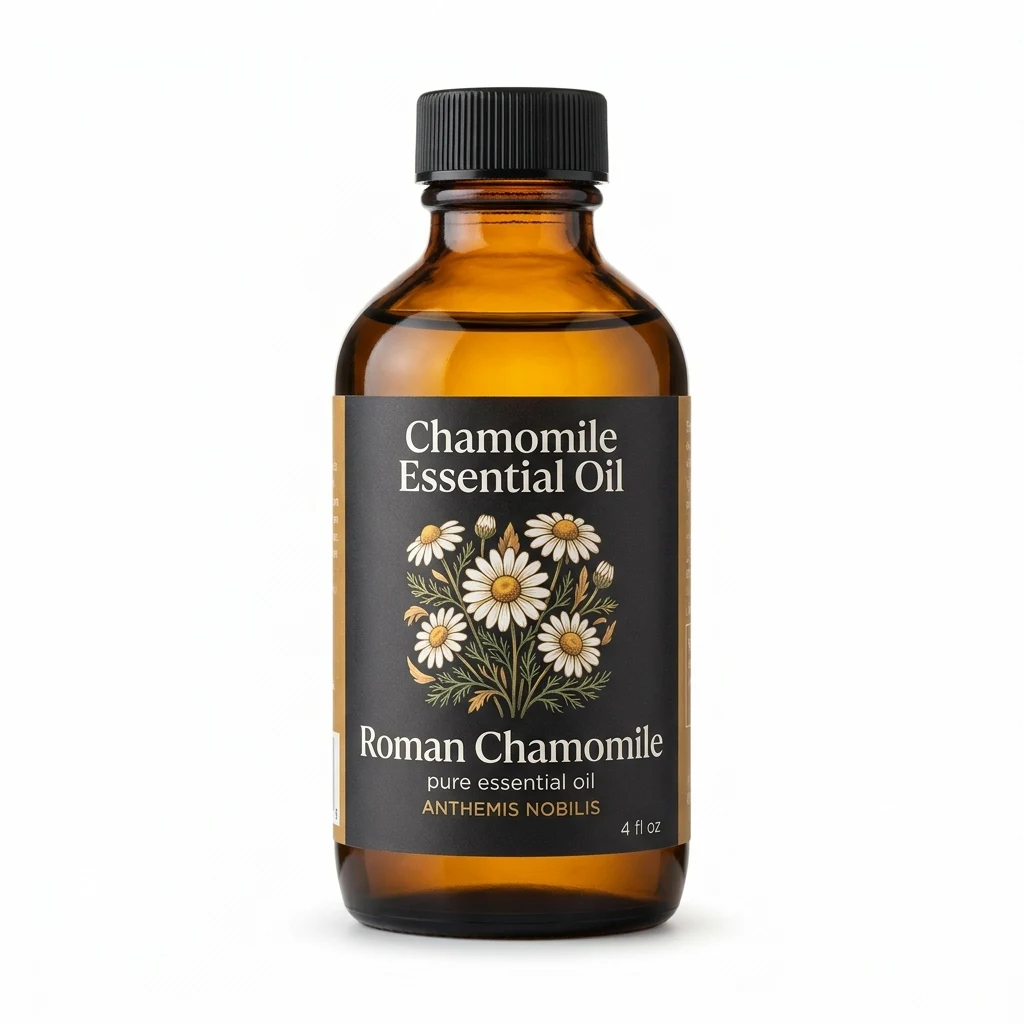
Roman Chamomile Essential Oil
Our own Roman Chamomile Essential Oil, in sizes from 0.5 oz to bulk.
From $32.99
Shop Now →Meet the Plant: Chamaemelum nobile
Roman chamomile comes from Chamaemelum nobile (sometimes still listed under its older name, Anthemis nobilis). It's a low-growing perennial native to Western Europe, particularly the Atlantic-facing regions of England, France, and Belgium. Unlike its botanical cousin German chamomile (Matricaria chamomilla), the Roman species tends to hug the ground, spreading outward rather than growing tall. It was historically cultivated in English gardens as a fragrant lawn plant, releasing its characteristic apple-like scent underfoot.
The essential oil is steam-distilled from the flowering tops and, in some cases, the entire above-ground portion of the plant. It takes a considerable quantity of flowers to yield a small amount of oil, which is one reason roman chamomile oil sits at a higher price point than many other common essential oils.
Curious how this species compares to its blue-hued relative? Our article on Roman vs. German chamomile essential oil covers the key botanical and aromatic differences in depth.
Chemical Composition: What's Inside the Bottle
The chemistry of roman chamomile essential oil is dominated by a group of compounds called esters. This is the defining characteristic that sets it apart from most other plant oils and explains its notably smooth, sweet aroma. Esters are formed when an acid and an alcohol combine, and in the botanical world, they tend to produce fruity, calming-on-the-nose scent profiles.
The Major Esters
The star compound in roman chamomile oil is isobutyl angelate, which typically comprises anywhere from 15% to 30% of the total oil depending on the source and growing conditions. Close behind it are related angelate esters: isoamyl angelate, 2-methylbutyl angelate, and propyl angelate. Together, the angelate ester family can make up well over half of the oil's total composition.
These compounds are largely responsible for the oil's characteristic apple-chamomile sweetness. Perfumers and blenders prize this ester-rich profile for its ability to soften harsher notes in a blend and add diffusive, ambient warmth.
In addition to the angelates, you'll typically find isobutyl isobutyrate and methallyl angelate present in smaller concentrations, along with trace amounts of various alcohols and oxides.
Notable Minor Compounds
Roman chamomile oil also contains smaller amounts of chamazulene in some fractions, though at far lower concentrations than what you'd find in German chamomile oil. German chamomile is the one famous for its deep, almost electric blue color, driven by high chamazulene content produced during the distillation process. Roman chamomile produces very little of this compound by comparison, which is why it remains pale yellow rather than blue. For more on chamazulene specifically, see our piece on why blue chamomile essential oil is blue.
Other minor constituents in roman chamomile oil include alpha-pinene, beta-pinene, camphene, and small amounts of cineole. Their presence varies by harvest, distillation method, and geographic origin, but they tend to contribute subtle herbal or resinous depth beneath the dominant ester notes.
What Research Observations Tell Us
The scientific literature on roman chamomile essential oil is smaller than the body of research on German chamomile, so it's worth being precise about what has actually been studied and what remains in the realm of traditional use and anecdotal experience.
Aroma and Psychophysiological Responses
Some research in the field of aromachology, the study of how fragrance interacts with psychological states, suggests that ester-rich essential oils may support a subjective sense of ease and mental quiet when inhaled. Roman chamomile's high ester content makes it a compound of interest in this context. Researchers have explored how certain volatile compounds affect brainwave activity and self-reported mood states, and some observations point to the possibility that sweet, smooth aromatic profiles may correlate with reduced perceived tension in study participants. These are observational findings, not conclusions about cause and effect, and the studies are generally small in scale.
Skin Contact Studies
Research has examined chamomile extracts and essential oil constituents for their behavior in skin models. Some in-vitro observations suggest that certain ester compounds may interact with skin surface proteins, though translating lab findings to real-world topical outcomes is always a complex step. What is reasonably well-documented is the sensitization potential of some angelate esters at higher concentrations, which is a key safety consideration covered below.
Aromatic Chemistry and Stability
From an analytical chemistry standpoint, the ester-rich composition of roman chamomile oil makes it somewhat susceptible to hydrolysis over time, particularly when the oil is exposed to heat, light, or moisture. This means storage conditions genuinely matter for preserving the oil's aromatic character. Research on ester degradation pathways in essential oils suggests that properly stored roman chamomile oil should remain true to character for approximately two to three years, though premium producers typically recommend use within eighteen months of distillation for best aromatic quality.
Aroma Profile and Use in Blending
Roman chamomile oil is a middle-to-top note in perfumery terms, with moderate staying power on skin and in diffusion. Its scent has been described as warm apple, hay-like sweetness, faintly herbaceous, and almost biscuity at lower concentrations. At higher concentrations or undiluted, it can tip into something more medicinal-smelling, which is why dilution is both a safety requirement and an aromatic one.
It blends particularly well with:
- Lavender: The two together produce a classic soft-floral pairing widely used in evening and bedtime-routine products.
- Bergamot: Adds a citrus brightness that lifts the sweetness and keeps the blend feeling fresh.
- Clary sage: A deeper, more complex herbaceous note that grounds the chamomile's lighter sweetness.
- Rose or rose absolute: For luxurious skin-care and bath blends, the floral pairing feels cohesive and rounded.
- Cedarwood: Adds warm, woody depth, excellent in diffuser blends designed for calm evening atmosphere.
Everyday Uses for Roman Chamomile Essential Oil
The uses for roman chamomile essential oil fall into a few natural categories: aromatic, topical (always diluted), and atmospheric.
Diffuser Blends for Evening Wind-Down
A small amount of roman chamomile oil in a diffuser during a bedtime routine is one of the most popular applications. The sweet, soft aroma creates an environment that many people find supportive of a slower, quieter mental pace in the evening. A simple starting blend: three drops roman chamomile, three drops lavender, two drops bergamot in a standard 100ml ultrasonic diffuser.
Diluted Skin-Care Applications
Roman chamomile oil is commonly incorporated into facial oils, serums, and balms, particularly formulations positioned for sensitive or reactive skin types. Its soft aroma and ester-rich profile make it appealing in this context. Always dilute to 0.5% to 1% for facial applications, which translates to roughly three to six drops per one fluid ounce (30ml) of carrier oil or unscented base.
Bath and Body Rituals
Adding roman chamomile to a bath salt blend or body oil creates a genuinely pleasant aromatic experience. For bath use, mix your essential oil into a dispersant such as a carrier oil, full-fat milk, or unscented liquid soap before adding to running water. Never drop essential oils directly into bath water, as they will float undiluted on the surface and make direct skin contact at full strength.
Linen and Room Spray
A linen mist made with roman chamomile is a low-effort way to bring its scent into a bedroom or relaxation space. Combine distilled water, a small amount of alcohol (such as high-proof vodka or perfumer's alcohol to help disperse the oil), and your chosen blend. Shake well before each use.
Safety Profile and Contraindications
Roman chamomile essential oil has a generally favorable safety profile when used appropriately, but several important considerations apply.
Dilution Guidelines
The International Fragrance Association (IFRA) and industry bodies such as the Research Institute for Fragrance Materials (RIFM) have issued guidance on chamomile essential oil use in leave-on and rinse-off products. For leave-on skin applications, a dilution rate of 0.5% to 1% is widely recommended for most adults. For body products and bath preparations, up to 2% is generally considered appropriate. Never apply undiluted roman chamomile oil directly to skin.
Sensitization Potential
Some of the angelate esters present in roman chamomile oil, particularly at higher concentrations, have been identified as potential skin sensitizers in susceptible individuals. This means that repeated use of high-concentration applications could potentially trigger a sensitization response over time, even if initial applications caused no reaction. This is a key reason to keep dilutions conservative and to perform a patch test before any new topical use.
Patch test protocol: Dilute the oil to your intended use concentration in your chosen carrier. Apply a small amount to the inner forearm or the crook of the elbow. Leave uncovered for 24 hours and check for redness, itching, or irritation before proceeding with wider use.
Populations Requiring Additional Caution
- Pregnancy and nursing: Essential oil use during pregnancy is an area where caution and professional guidance are always warranted. Consult a qualified healthcare provider before using roman chamomile oil if you are pregnant or nursing.
- Young children: Keep essential oil products away from young children. Many essential oils are not considered appropriate for use with infants and toddlers without specific professional guidance.
- Ragweed and related plant sensitivities: Roman chamomile belongs to the Asteraceae (daisy) family. People with known sensitivities to plants in this botanical family should exercise additional caution and consult a healthcare provider before using chamomile products.
- Pets: Many essential oils, including roman chamomile, may be harmful to cats, dogs, and other household animals. Avoid diffusing essential oils in enclosed spaces with pets and keep all oils securely stored out of reach.
Sourcing and Quality Indicators
The quality of roman chamomile essential oil varies considerably across the market. Here's what to look for.
Botanical and Geographic Origin
True roman chamomile oil is distilled from Chamaemelum nobile. Look for suppliers who clearly list the Latin botanical name on the label. Origin matters, too. English-grown and French-grown roman chamomile are widely regarded as producing oils with particularly well-developed aromatic profiles. Belgian and Hungarian sources are also reputable. If a product simply says "chamomile oil" without specifying Roman or German (Matricaria chamomilla), ask for clarification. These are different oils with different chemistry and very different aromas.
For a fuller comparison of the two species' profiles, our article on German chamomile oil and why it stands apart is a useful companion read.
GC/MS Testing
Gas chromatography/mass spectrometry (GC/MS) analysis is the industry-standard method for verifying essential oil composition and detecting adulteration. Reputable suppliers make GC/MS batch reports available to customers, either on request or published directly on their websites. For roman chamomile specifically, a genuine GC/MS report should show isobutyl angelate and related angelate esters as the primary constituents. Be cautious of oils with unusually low prices, as roman chamomile is genuinely costly to produce and significantly underpriced products often indicate blending, dilution, or substitution with synthetic compounds.
Packaging and Storage
Roman chamomile oil should be sold in dark glass bottles (amber or cobalt blue) to protect it from light degradation. Check that the cap or dropper insert forms a tight seal. Once opened, store the bottle in a cool, dark location. Some enthusiasts store their more precious oils in a dedicated refrigerator, though bringing the bottle to room temperature before use helps the oil flow freely and allows the aroma to express fully.
What Honest Pricing Looks Like
A 5ml bottle of genuine, GC/MS-verified roman chamomile essential oil from a quality supplier typically falls in the $15 to $40 range depending on origin and brand positioning. Prices significantly below this band are worth scrutinizing carefully. Roman chamomile is not a cheap crop to grow or distill, and the economics of the supply chain don't support very low retail prices for authentic product.
Bringing It All Together
Roman chamomile essential oil is a genuinely interesting botanical ingredient: chemically distinctive, aromatically complex, and versatile in everyday home and personal care use. Its ester-forward profile sets it apart from most other essential oils, and that same chemistry informs both its soft, sweet character and the specific safety considerations that apply to it. Sourcing with care, diluting appropriately, and using it within a thoughtful aromatic or skin-care ritual allows you to get the most from what this small but impressive plant has to offer.
As with all essential oils, the guidance of a qualified healthcare provider is the right starting point if you have any specific health concerns or questions about suitability for your situation.