
German Chamomile Oil: Why This Deep Blue Oil Stands Apart
Open a bottle of genuine german chamomile essential oil for the first time and the color stops you cold. It is a vivid, inky blue, sometimes edging toward teal or navy depending on concentration and age. Most botanical oils are golden, green-tinged, or water-pale. This one looks like something from a different category entirely. That color is not cosmetic branding or a dye. It is the direct visual signature of a specific chemical reaction that occurs during steam distillation, and understanding it is the first step toward understanding what makes german chamomile oil genuinely distinctive among the crowded world of floral and herbal essential oils.
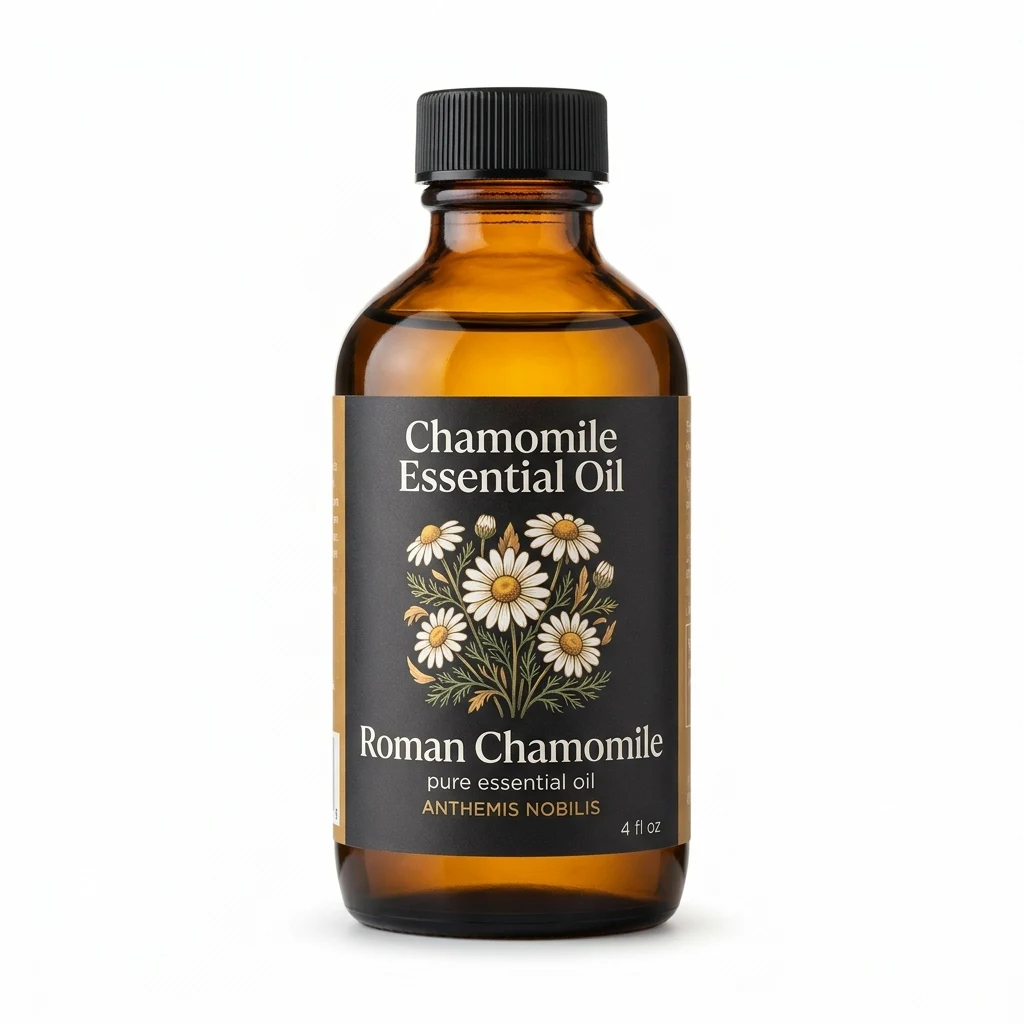
Roman Chamomile Essential Oil
Our own Roman Chamomile Essential Oil, in sizes from 0.5 oz to bulk.
From $32.99
Shop Now →This deep dive covers the chemistry behind that blue, the key compounds researchers have focused on, what the current body of observations suggests about its cosmetic and aromatic applications, how to evaluate quality when sourcing, and the safety profile every user should know before incorporating it into a routine.
The Chemistry Behind the Blue: Chamazulene and How It Forms
German chamomile essential oil does not actually contain chamazulene in the living plant. This is a point that surprises many people new to botanical chemistry. The plant, Matricaria chamomilla (also listed commercially as Matricaria recutita), contains a sesquiterpene lactone called matricine. When steam distillation applies heat to the plant material, matricine undergoes a decarboxylation reaction and converts into chamazulene, the intensely blue-pigmented compound that defines genuine german chamomile oil.
Chamazulene itself is a sesquiterpene hydrocarbon. In a quality oil, its concentration typically ranges from roughly 1 percent to 35 percent, varying considerably based on plant origin, growing conditions, harvest timing, and distillation parameters. Higher chamazulene content generally corresponds to a deeper, more saturated blue color and a more pronounced earthy-herbaceous character in the scent profile. For a detailed look at the science of why this compound produces such a striking hue, the article why blue chamomile essential oil is blue walks through the photochemical explanation step by step.
Full Chemical Composition: Beyond the Blue
Chamazulene gets most of the attention, but a complete gas chromatography-mass spectrometry (GC-MS) analysis of german chamomile essential oil reveals a more layered picture. The primary compounds researchers and quality analysts look for include:
- Alpha-bisabolol: Often the dominant compound by percentage in high-quality oils, alpha-bisabolol is a monocyclic sesquiterpene alcohol. It is colorless and contributes a soft, faintly floral note. Research observations consistently flag it as one of the more cosmetically significant compounds in chamomile-derived ingredients, and it appears frequently as a standalone ingredient in skincare formulations.
- Bisabolol oxides A and B: Structural relatives of alpha-bisabolol, these oxides are also common in german chamomile oil. Their presence and ratio relative to alpha-bisabolol is sometimes used as an authenticity marker when evaluating oil quality.
- Chamazulene: As described above, the signature compound. Its percentage is highly variable.
- En-yn-dicycloether (also called cis- and trans-spiroether): Unique to the chamomile genus and sometimes cited in compositional analyses as a distinguishing marker for Matricaria species specifically.
- Beta-farnesene: A sesquiterpene found in varying concentrations that contributes to the overall scent character.
The exact ratio of these compounds shifts meaningfully based on several factors. Oils from Egyptian-grown Matricaria chamomilla often show higher alpha-bisabolol content. German and Hungarian sourced material has traditionally been associated with higher chamazulene levels, though agricultural conditions in any given year can shift these ratios. This variability is one reason sourcing transparency and GC-MS documentation matter so much when evaluating german chamomile essential oil.
What Research Observations Suggest
It is important to frame everything in this section clearly: the research discussed here consists of laboratory studies, in-vitro observations, and limited human studies. None of these observations constitute medical claims, and german chamomile essential oil is not positioned as a substitute for any professional medical guidance.
Alpha-Bisabolol and Skin Research
A meaningful portion of the published research on chamomile constituents focuses on alpha-bisabolol and its cosmetic application. Some research suggests that alpha-bisabolol may support skin's appearance of smoothness and may help promote a sense of comfort when applied to the surface. Cosmetic chemists have incorporated it into formulations targeting the look of sensitized or reactive skin for decades, largely based on a combination of research observations and long-standing use in European botanical cosmetics.
A study published in the journal Skin Pharmacology and Physiology observed that bisabolol-containing preparations showed favorable characteristics in relation to skin surface appearance, though the researchers noted that further controlled studies are needed to clarify mechanisms. This is the kind of measured, ongoing scientific conversation that is common in phytochemistry: promising initial observations followed by calls for more rigorous work.
Chamazulene: Research Directions
Chamazulene has attracted research interest in its own right. Some in-vitro research suggests that chamazulene may interact with certain cellular pathways related to the appearance of redness and irritation at the skin surface. Again, these are laboratory observations rather than confirmed outcomes in human subjects, and the concentration of chamazulene in a diluted essential oil formulation is significantly lower than the concentrations used in many lab settings.
What this body of observation does suggest, from a cosmetic formulator's standpoint, is that german chamomile oil may be a useful candidate ingredient for products focused on the appearance of calmed, balanced skin. Many professional skincare formulators work with it for exactly this reason.
Aromatic Profile and Atmospheric Use
German chamomile oil has a scent profile that is distinctly different from its close botanical relative, roman chamomile. Where roman chamomile tends toward a softer, more overtly sweet and apple-like character, german chamomile oil carries a deeper, more complex, and notably herbaceous quality. Some describe it as earthy, almost musty in high concentrations, with a warm undertone. People who use it in diffusion routinely report that it contributes a grounding, settling quality to an evening atmosphere, and it blends well with lavender, clary sage, and citrus oils in diffuser applications.
For a side-by-side comparison of how the two species differ in scent character and application, the guide on roman vs. german chamomile essential oil covers the distinction in practical detail.
Safety Profile and Contraindications
German chamomile essential oil has a well-established safety profile when used appropriately, but several important considerations apply.
Dilution
Like all essential oils, german chamomile oil must be diluted in a carrier oil before any skin application. The International Fragrance Association (IFRA) and established aromatherapy references generally suggest a maximum dermal use rate of around 0.5 to 1 percent for leave-on skin products, though some sources cite slightly higher rates for rinse-off applications. For general body use, a dilution of 0.5 to 1 percent (roughly 3 to 6 drops per 30 mL of carrier oil) is a commonly recommended starting point. Always perform a patch test on a small area of inner-forearm skin before broader application, and allow 24 hours to observe any response.
Asteraceae Family Sensitivity
German chamomile belongs to the Asteraceae (daisy) plant family. Individuals who know they have sensitivities to other members of this family, including ragweed, marigold, or chrysanthemum, should approach german chamomile products with particular caution and consult a healthcare provider before use. Cross-reactivity within the Asteraceae family has been documented in the literature, and patch testing is especially important for this group.
Pregnancy and Breastfeeding
The use of essential oils during pregnancy and breastfeeding should always be discussed with a qualified healthcare provider before starting any new aromatic or topical routine. This applies to german chamomile oil. Current guidance generally recommends caution with most essential oils during the first trimester in particular.
Children
Essential oil use for infants and young children requires specific dilution guidance appropriate for the child's age. Standard adult dilution rates are not appropriate for children. Consult a qualified aromatherapy practitioner or healthcare provider for age-appropriate guidance.
Skin Application Notes
The deep blue color of german chamomile oil can temporarily stain fabric, skin, and surfaces. This is not a safety concern but is worth knowing before use. The color is the chamazulene, and it fades relatively quickly on skin but can mark light-colored textiles.
Sourcing and Quality Indicators
The quality range in german chamomile essential oil is genuinely wide. Because the oil commands a higher price than many common essential oils (it requires substantial plant material and careful distillation), the market includes adulterated products and synthetic chamazulene additions designed to mimic the characteristic blue color without the full chemical complexity of a genuine steam-distilled oil.
GC-MS Testing
The most reliable quality indicator is a complete, batch-specific GC-MS report from a reputable third-party laboratory. This document shows the actual chemical composition of the specific batch you are buying, not a generic species average. Reputable suppliers make these reports available on request or display them on their websites. If a supplier cannot provide batch-specific GC-MS data, that is a meaningful gap in quality transparency.
Color and Viscosity
Genuine german chamomile essential oil should be a vivid blue to deep blue-green in color. It is not water-thin like many citrus oils; it has a slightly richer, more viscous quality. An oil that is clear, pale yellow, or green-gray rather than distinctly blue warrants closer investigation, though it is worth noting that color can shift somewhat with age and storage conditions. Older oils may show some fading of the blue as chamazulene oxidizes over time.
Botanical Name and Country of Origin
Confirm that the oil is labeled with the full Latin binomial: Matricaria chamomilla or Matricaria recutita. Both names refer to the same species and are used interchangeably across suppliers. The country of origin is also informative. Egypt, Hungary, Germany, Bulgaria, and Morocco are established production regions, each contributing slightly different chemical profiles. A quality supplier will specify both the botanical name and origin on the product label or certificate of analysis.
Price as a Quality Signal
German chamomile essential oil is not inexpensive to produce, and its retail price generally reflects this. A 5 mL bottle typically ranges from roughly $20 to $50 or more depending on quality tier and supplier. An unusually low price for what is labeled as pure german chamomile oil should prompt scrutiny of the GC-MS data.
Comparing German and Roman Chamomile: A Quick Chemistry Note
German and roman chamomile (Chamaemelum nobile) are sometimes grouped together in conversation simply because they share a common name and a similar floral heritage. Chemically, they are quite different oils. Roman chamomile essential oil is dominated by esters, particularly isobutyl angelate and other short-chain esters that give it a sweeter, fruitier character. It does not produce chamazulene during distillation and carries none of the characteristic blue color. For a closer look at roman chamomile's own aromatic profile and everyday uses, the article on roman chamomile essential oil's aroma character explores what makes that oil a distinct choice in its own right.
The two oils appeal to different formulation goals and different atmospheric preferences. Neither is categorically superior. They are simply different, and understanding that distinction helps you make more deliberate choices about which one belongs in a given product or blending project.
Working with German Chamomile Oil: Practical Notes
Because german chamomile oil is potent and concentrated, most formulators and home blenders use it in small quantities, often as a minor component rather than a dominant note. In skincare formulations, even a fraction of a percent can carry the characteristic blue color into a finished product, which is sometimes a desired visual signal of botanical content and sometimes something to manage depending on the product's intended appearance.
In diffusion, a little goes a long way. The scent is rich and earthy at full concentration. Blending with lavender, bergamot, or cedarwood can soften and round out the profile into something more immediately accessible for a bedtime wind-down diffuser blend.
Storing it correctly extends its useful life. A dark glass bottle (the oil is typically sold in amber or cobalt glass for this reason), stored away from heat and light, can maintain good quality for two to three years. Note the batch date and GC-MS date when you purchase, and track your own opening date so you use the oil within a reasonable window of peak quality.
German chamomile essential oil rewards a bit of study before use. Its chemistry is genuinely interesting, its quality indicators are learnable, and the more you understand about what is actually in the bottle, the more thoughtfully you can incorporate it into a cosmetic, aromatic, or blending practice.