Lavender and Chamomile Essential Oil: A Classic Evening Pairing
Some combinations simply make sense. Lavender and chamomile essential oil have been placed together in aromatic preparations for centuries, and for good reason: their scent profiles are genuinely complementary, their botanical characters share a softness that suits slow, quiet hours, and together they create an atmosphere that feels both familiar and considered. Add a carefully chosen frankincense to the equation, and the blend gains depth without losing its gentleness.
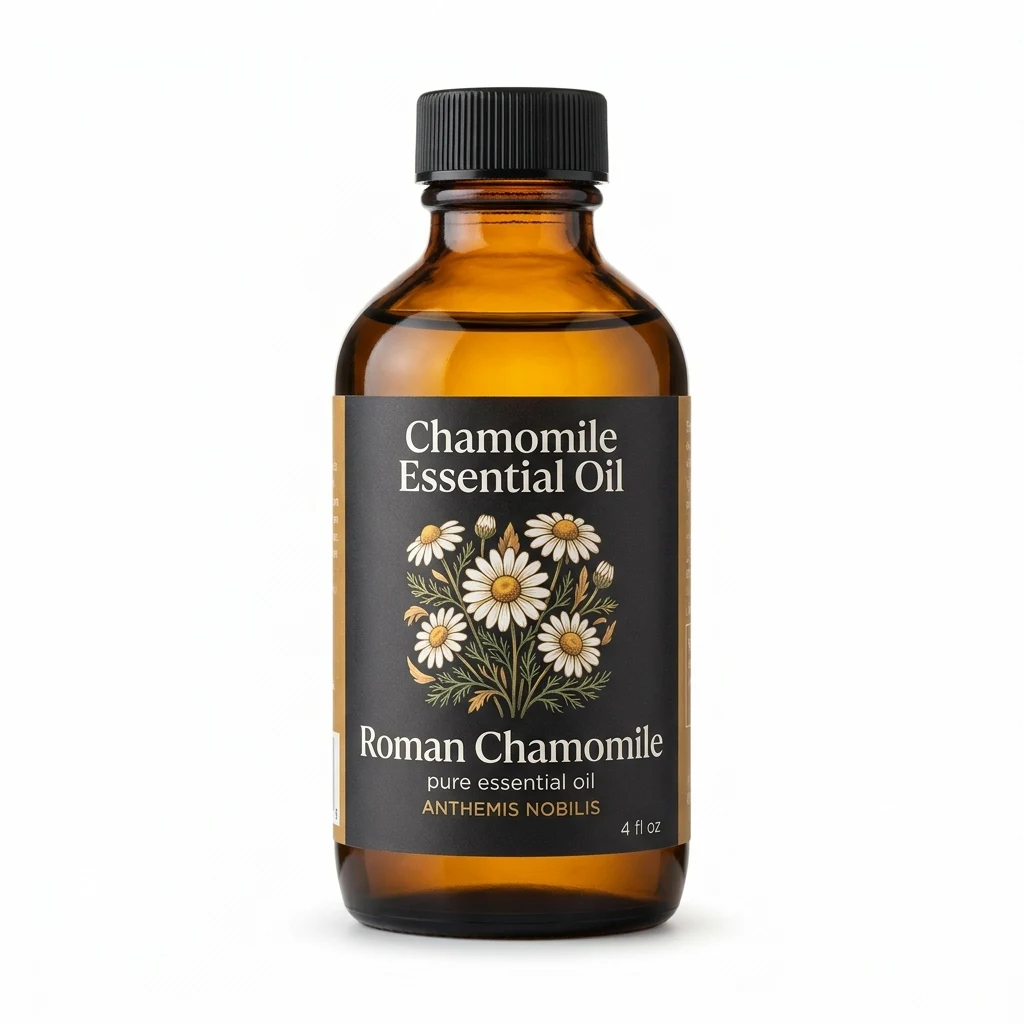
Roman Chamomile Essential Oil
Our own Roman Chamomile Essential Oil, in sizes from 0.5 oz to bulk.
From $32.99
Shop Now →This guide focuses on one specific frankincense variety, Boswellia serrata, and explains exactly why it earns its place here. You will find a complete recipe with precise measurements, step-by-step blending instructions, storage notes, and several variations to make the formula your own.
Why These Three Oils Work Together
Before arriving at the recipe, it helps to understand what each oil actually contributes to the finished blend. Great aromatic combinations are built on contrast and harmony in equal measure, and this trio has both.
Lavender Essential Oil
True lavender (Lavandula angustifolia) is one of the most widely recognized florals in perfumery and home fragrance. Its scent is herbaceous and clean, with a softly sweet floral quality that feels open rather than heavy. It acts as a natural bridge in blends, softening sharper notes and lifting heavier base tones. In this recipe, lavender carries the blend's first impression.
Chamomile Essential Oil
Roman chamomile (Chamaemelum nobile) brings a warm, apple-like sweetness with faint herbal undertones. It is rounder and more intimate than lavender, sitting just behind it in a well-structured blend. If you want to understand the full character and sourcing story of this oil, the complete guide to chamomile essential oil covers everything from botanical origin to extraction method in detail. For this recipe, chamomile provides the heart note: the part of the fragrance that lingers and warms as the blend evolves.
Frankincense Serrata: The Chosen Base
There are several frankincense species available to blenders, and choosing the right one genuinely changes the character of a finished composition. For an evening blend built around lavender and chamomile, Boswellia serrata is the strongest choice, and here is why.
Boswellia serrata, sourced primarily from India, has a softer, slightly sweeter resinous profile compared to its East African relatives. Where Boswellia carterii can carry a citrus brightness and Boswellia sacra reads as more austere and high-pitched, serrata offers a warm, woody-balsamic base with a gentle spice. It does not compete with chamomile's sweetness. Instead, it grounds it, giving the blend a sense of weight and duration that the two florals alone cannot achieve.
Serrata also blends unusually well with lavender. The woody-herbal quality of the frankincense echoes the herbal facet in lavender's profile, creating a smooth transition between the top and base notes. The result feels cohesive rather than layered, which is exactly what you want in a home diffuser blend or a personal fragrance oil.
You can explore the sourcing and quality details for this resin at the frankincense serrata product page before purchasing.
The Classic Evening Blend: Full Recipe
This recipe produces a 2% dilution roller blend (10 ml) suitable for pulse points, and a separate set of drop ratios for diffuser use. Both versions use the same proportional balance.
Ingredients
| Ingredient | Drops (for 10 ml roller) | Milliliters (approx.) |
|---|---|---|
| Lavender essential oil (Lavandula angustifolia) | 5 drops | 0.025 ml |
| Roman chamomile essential oil (Chamaemelum nobile) | 3 drops | 0.015 ml |
| Frankincense serrata essential oil (Boswellia serrata) | 4 drops | 0.020 ml |
| Fractionated coconut oil (carrier) | To fill 10 ml | ~9.94 ml |
Total essential oil: 12 drops in 10 ml (approximately 2% dilution).
For Diffuser Use
Use the same proportional ratio: 5 drops lavender, 3 drops Roman chamomile, 4 drops frankincense serrata. No carrier oil is needed. Total: 12 drops for a standard 100 ml ultrasonic diffuser.
Equipment Needed
- One 10 ml glass roller bottle (amber or cobalt)
- A small glass measuring cup or beaker
- A glass dropper or pipette
- Labels for dating and identifying the blend
Step-by-Step Blending Instructions
- Prepare your workspace. Work on a clean, flat surface away from heat or direct sunlight. Gather all bottles and equipment before you begin. Having everything within reach reduces the chance of measurement errors.
- Add the essential oils first. Drop the frankincense serrata into your roller bottle or small beaker first, followed by the Roman chamomile, and then the lavender. Adding the base note first allows you to assess the blend as the lighter notes are introduced.
- Pause and evaluate. Before adding the carrier oil, hold the open bottle about 20 cm from your nose and take a gentle breath. The raw blend will be intense, but you should be able to identify whether the proportions feel balanced. If the chamomile reads as too sweet, reduce it by one drop. If the frankincense seems too prominent, reduce by one drop and add one more lavender.
- Add the carrier oil. Pour fractionated coconut oil into the bottle slowly, stopping just below the neck to allow room for the roller ball insert. Fractionated coconut oil is a good choice here because it is lightweight, odorless, and has a long shelf life that will not shorten the blend unnecessarily.
- Fit the roller ball and cap. Press the roller ball insert firmly into the bottle neck, then secure the cap. Invert the bottle gently three or four times to allow the oils to mix. Do not shake vigorously.
- Label immediately. Write the blend name, the date made, and the dilution percentage on your label. Attach it before setting the bottle down. Unlabeled bottles are a common source of confusion in home blending.
- Allow to rest. Set the finished blend aside for at least 24 hours before first use. The individual oils will marry during this resting period, and the fragrance will read as a unified whole rather than three separate notes.
Dilution, Patch Testing, and Safety Notes
The 2% dilution used in this recipe is a widely cited general guideline for adult use on intact skin. It is worth understanding what that means in practice: at 2%, the essential oil content is low relative to the carrier, which keeps the preparation gentle for regular use on pulse points such as the wrists, inner elbows, or the back of the neck.
Patch test before first use. Apply a small amount of the diluted blend to the inner forearm and wait 24 hours. If you notice any redness, itching, or irritation, discontinue use and rinse the area with mild soap and water. Do not apply to broken, sunburned, or sensitive skin.
Roman chamomile and lavender are among the gentler oils for adult skin at proper dilutions, but individual responses vary. Those with known sensitivities to plants in the Asteraceae family (which includes chamomile) should exercise extra care and consult a qualified healthcare provider before use.
Keep all essential oil blends away from children, and store them out of reach. Do not use on children under the age of two without professional guidance. If you are pregnant or nursing, consult a healthcare provider before using any essential oil blend on your skin.
For diffuser use, ensure the room is ventilated and that pets, particularly cats and birds, are not exposed to prolonged diffusion. Run the diffuser in intervals of 30 to 60 minutes rather than continuously.
Storage and Shelf Life
Store your finished roller blend in a cool, dark location. A drawer or cabinet away from the bathroom (where steam and heat fluctuate) is ideal. The amber or cobalt glass protects the oils from light degradation.
Fractionated coconut oil is one of the most stable carrier options and will not go rancid quickly. The limiting factor for shelf life in this blend is the essential oils themselves. Lavender is relatively stable at 12 to 18 months. Roman chamomile can begin to lose its characteristic brightness after about 12 months, though it remains usable. Frankincense serrata, being a resinous oil, tends to age gracefully and may actually mellow and deepen over time.
Best used within 12 months of the blending date. If the blend develops a noticeably flat, musty, or off scent before that point, it is time to make a fresh batch.
Variations on the Classic Blend
Once you are comfortable with the base recipe, these three variations offer different directions without straying far from the original character. Each one suits slightly different moods or settings.
Variation 1: Deeper and Woodier
Increase the frankincense serrata from 4 drops to 6 drops, and reduce the chamomile from 3 drops to 2 drops. Keep the lavender at 5 drops. This version leans into the resinous base, making it well-suited for a slower, more grounded evening atmosphere. The chamomile is still present but acts as a subtle sweetener rather than a co-lead note. For more ideas about using chamomile as a supporting note in evening settings, the guide to chamomile oil in your evening wind-down routine offers a range of practical approaches.
Variation 2: Lighter and Brighter
Add 2 drops of bergamot (Citrus bergamia, bergapten-free for skin use) to the base recipe, and reduce the frankincense to 3 drops. The bergamot introduces a clean, slightly citrus-floral lift that makes the blend feel more airborne and less heavy. This variation works especially well in the diffuser, where it creates a lighter room fragrance suited to early evening rather than the hour before sleep.
Variation 3: Floral and Soft
Replace the frankincense serrata entirely with 4 drops of sandalwood (Santalum album or Santalum spicatum). The result is a creamy, deeply floral blend where lavender and chamomile take full center stage and the sandalwood provides a milky, smooth base. This is the most purely aromatic of the three variations, with less of the resinous complexity that frankincense brings. It suits those who prefer a softer, more powdery evening fragrance.
If you enjoy exploring chamomile in the diffuser specifically, the collection of 5 chamomile diffuser blends for a calm home atmosphere includes several recipes that complement the direction of this pairing.
Building the Ritual Around the Blend
A blend like this one earns its place through consistency. The scent itself is pleasant on first encounter, but its real value comes from repeated association: the same fragrance used at the same point in your evening creates a reliable sensory signal that the day is drawing to a close.
Some people use the roller on their wrists just after changing out of work clothes. Others run the diffuser during a bath or while reading. The exact moment matters less than the regularity. Over time, the combination of lavender chamomile essential oil, serrata resin, and a consistent routine creates something that feels genuinely your own.
Start with the base recipe. Give it two weeks. Then, if you are curious, try one of the variations and notice what changes. Aromatic blending is as much about developing your own preferences as it is about following a formula, and this classic pairing gives you a very solid place to start.