DIY Chamomile Facial Oil: A Gentle Nightly Skincare Blend
A well-made facial oil can transform a bedtime skincare routine from forgettable to genuinely enjoyable. This chamomile facial oil recipe is built around the soft, apple-tinged scent and skin-compatible properties that make chamomile essential oil a favourite in botanical cosmetics. It is approachable for first-time blenders and satisfying for experienced ones.
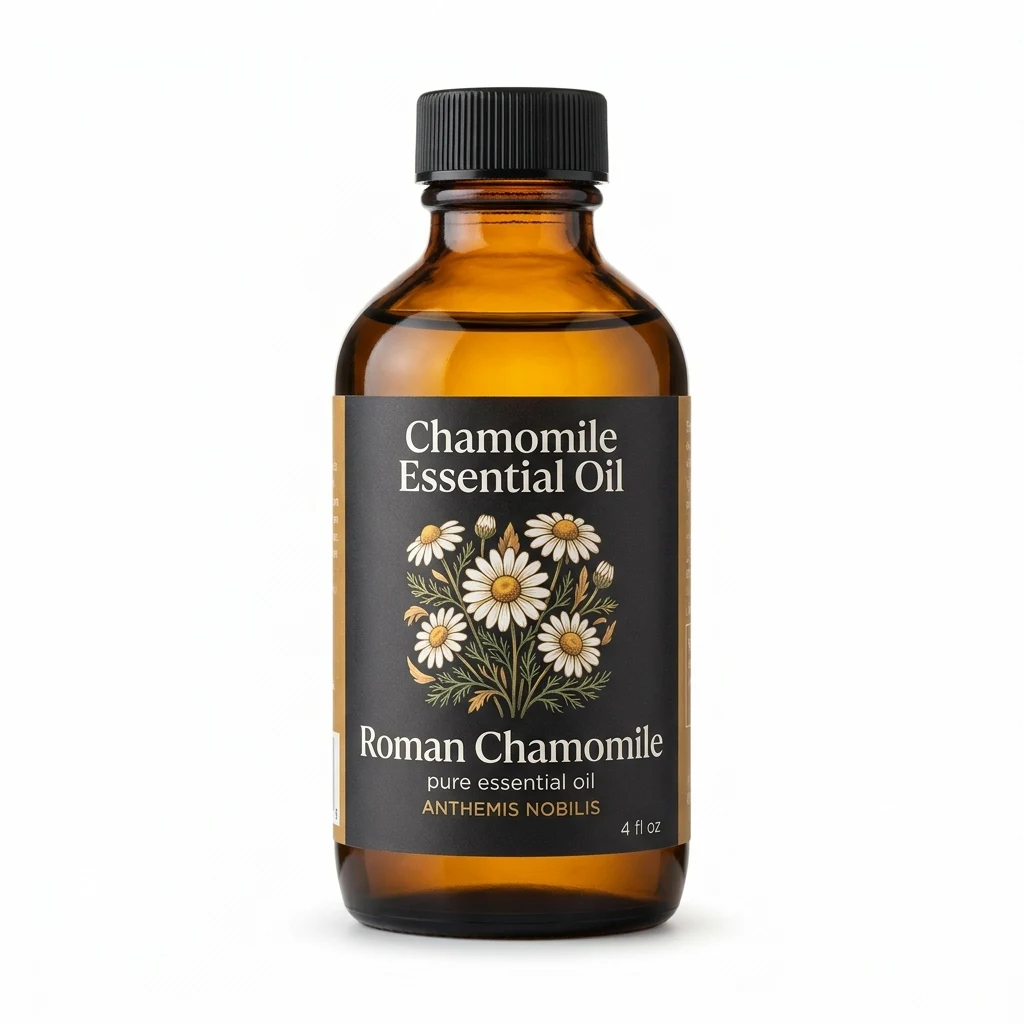
Roman Chamomile Essential Oil
Our own Roman Chamomile Essential Oil, in sizes from 0.5 oz to bulk.
From $32.99
Shop Now →This guide walks you through every step: what to buy, how to blend, how to store your finished oil, and how to adapt the recipe to suit your preferences. Before diving into the method, take a moment to read the safety section. Proper dilution and patch testing are non-negotiable with any botanical facial oil.
About This Recipe
- Difficulty level: Beginner-friendly
- Active prep time: 10 to 15 minutes
- Total time (including labelling and cleanup): 20 to 25 minutes
- Yield: Approximately 30 ml (1 fl oz), enough for 4 to 6 weeks of nightly use
- Skin focus: Dry, sensitive, or dull-looking skin; nightly application
Why Chamomile for a Nightly Facial Oil?
Chamomile essential oil, particularly the Roman variety (Chamaemelum nobile), is widely used in cosmetic formulations for its mild scent profile and its compatibility with sensitive skin types. Its aroma is floral, faintly herbaceous, and genuinely calming in an olfactory sense, making it a natural fit for an evening ritual.
Some researchers have noted that chamomile compounds, including chamazulene in German chamomile (Matricaria chamomilla), may support the appearance of comfortable, balanced skin. These are cosmetic observations, not medical claims. If you are curious about the broader cosmetic applications of this oil, the complete cosmetic care guide for chamomile oil is a helpful starting point.
For a focused overview of skin-specific cosmetic uses, see this companion piece on chamomile oil for skin: gentle cosmetic uses and simple applications.
Ingredients
This recipe uses a 1% dilution of chamomile essential oil in a carrier oil base. That concentration is appropriate for daily facial use on most adult skin types. The carrier oils below were chosen for their light texture and their cosmetic compatibility with facial skin.
Carrier Oil Base (29.7 ml total)
- Jojoba oil: 15 ml (half the base). Jojoba is technically a liquid wax and is prized in cosmetics for its long shelf life and its similarity to the skin's natural sebum. It absorbs without a heavy residue.
- Rosehip seed oil: 10 ml. Cold-pressed rosehip is rich in fatty acids and has a long track record in cosmetic skincare. It gives the blend a slightly more nourishing feel.
- Squalane (plant-derived): 4.7 ml. A lightweight, stable oil that blends beautifully with both jojoba and rosehip. It adds a silky finish and helps extend shelf life.
Essential Oil (0.3 ml)
- Roman chamomile essential oil (Chamaemelum nobile): 0.3 ml, approximately 6 drops. This gives a final dilution of 1% in a 30 ml bottle.
Optional aromatic additions (still within a 1% total dilution):
- 3 drops Roman chamomile + 3 drops lavender essential oil
- 3 drops Roman chamomile + 2 drops frankincense + 1 drop rose (absolute or essential oil)
If you choose a blend, the combined total of all essential oils must not exceed 6 drops (0.3 ml) in 30 ml of carrier oil.
Equipment You Will Need
- One 30 ml (1 fl oz) amber or cobalt glass dropper bottle with a tight-fitting lid
- Small glass measuring beakers or a 30 ml pipette for accuracy
- A clean glass stirring rod or a toothpick for gently mixing inside the bottle
- A small funnel (optional but helpful)
- Labels and a permanent marker for dating and naming the blend
- Isopropyl alcohol at 70% or higher for sanitising surfaces and equipment
Glass equipment is strongly preferred over plastic when working with essential oils. Certain essential oils can degrade or interact with low-quality plastics over time.
Step-by-Step Instructions
- Sanitise your workspace and equipment. Wipe down your work surface, beakers, funnel, and dropper bottle with isopropyl alcohol. Allow everything to air-dry fully before you begin. This step protects the shelf life of your finished oil.
- Measure your carrier oils. Using your beakers or pipette, measure 15 ml of jojoba oil, 10 ml of rosehip seed oil, and 4.7 ml of squalane. Pour each into the dropper bottle as you go, using the small funnel if needed.
- Add the essential oil. Count out 6 drops of Roman chamomile essential oil directly into the bottle. If you are using a blend (see variations below), add each essential oil one drop at a time, keeping a running count.
- Cap and gently roll. Secure the dropper lid. Roll the bottle slowly between your palms for 30 to 60 seconds. This distributes the essential oil without introducing air bubbles or heat. Avoid shaking vigorously.
- Label immediately. Write the blend name, date of creation, and all ingredients on the label. Do not rely on memory. If this bottle is ever used by someone else in your household, they need to know what is in it.
- Perform a patch test before first use. See the safety section below for full instructions.
How to Use This Facial Oil
Apply 3 to 5 drops to clean, slightly damp skin as the final step in your evening routine. Press the oil gently into skin with your palms rather than rubbing. Slightly damp skin helps with absorption and spreads the oil more evenly.
This oil is intended for nightly use. Some people prefer to use a facial oil every other night, especially during an initial period of getting to know how their skin responds to a new product. Either approach is fine.
Safety Warnings and Contraindications
Please read this section before making or using the recipe.
Dilution
This recipe is formulated at a 1% dilution, which is the commonly cited guideline for daily facial application in adult cosmetics. Do not increase the concentration of essential oil without consulting a qualified aromatherapist. A higher concentration does not produce better results and increases the likelihood of skin sensitivity.
For a detailed explanation of dilution ratios and how to calculate them for different bottle sizes, see this guide on how to dilute chamomile essential oil with carrier oils.
Patch Testing
Before applying this oil to your face, patch test it on the inside of your wrist or elbow. Apply a small amount, cover loosely with a bandage, and wait 24 hours. If you notice any redness, itching, or discomfort, do not use the blend on your face. Discontinue use and allow the area to air out.
Who Should Avoid This Blend
- Ragweed and related plant sensitivities: Chamomile belongs to the Asteraceae family, which includes ragweed, chrysanthemums, and marigolds. People who know they are sensitive to plants in this family should exercise caution and consider consulting a healthcare provider before use.
- Pregnancy and nursing: Consult a qualified healthcare provider before using essential oils during pregnancy or while nursing. Certain essential oils are not recommended during these periods.
- Children: This recipe is formulated for adults. Do not apply essential oil blends to the skin of young children without guidance from a qualified professional.
- Open or broken skin: Do not apply any essential oil blend to broken, irritated, or compromised skin.
Always consult a qualified healthcare provider if you have any concerns about using botanical products alongside other skincare, medications, or personal health circumstances.
Storage Instructions and Shelf Life
Store your finished facial oil in its amber glass bottle, away from direct sunlight, heat, and humidity. A cool, dark drawer or cabinet works well. Avoid storing it in the bathroom if your bathroom tends to get steamy.
Estimated shelf life by ingredient:
| Ingredient | Approximate Shelf Life |
|---|---|
| Jojoba oil | 2 years or more |
| Rosehip seed oil | 6 to 12 months (shortest in this blend) |
| Squalane | 2 years or more |
| Roman chamomile essential oil | 3 to 5 years (stored properly) |
The overall shelf life of this blend is governed by its most perishable ingredient. Rosehip seed oil oxidises relatively quickly, so plan to use this blend within 4 to 6 months of making it. If the oil develops an off or rancid scent at any point, discard it.
Adding 1 to 2 drops of vitamin E oil (tocopherol) to the blend can help slow oxidation and extend shelf life modestly. It is not required, but it is a common choice among home formulators.
Variations and Substitutions
Carrier Oil Swaps
If rosehip seed oil is unavailable or outside your budget, sea buckthorn carrier oil (use at a maximum of 10% due to its intense orange pigment) or marula oil are reasonable substitutes. Both bring their own cosmetic properties and blend well with jojoba.
For a very lightweight finish, replace squalane and rosehip with a full jojoba base. The result will feel less nourishing but will suit oilier skin types more comfortably.
German Chamomile Variation
German chamomile (Matricaria chamomilla) contains a higher concentration of chamazulene, which gives it a distinctive deep blue colour. Substituting German chamomile for Roman will tint your finished oil slightly blue-green. The scent is earthier and more herbaceous. The dilution ratio stays the same.
Aromatic Profile Adjustments
Floral evening blend: 3 drops Roman chamomile + 2 drops lavender + 1 drop ylang ylang. Soft, floral, and gentle on the senses at the end of the day.
Woodsy grounding blend: 3 drops Roman chamomile + 2 drops cedarwood + 1 drop frankincense. A quieter, earthier aromatic experience suited to a slow evening routine.
Simple single-note blend: 6 drops Roman chamomile only. Sometimes less is more, and letting chamomile stand alone produces a clean, unfussy scent that many people prefer.
All three of these options stay within the 1% dilution limit at 6 total drops per 30 ml.
Increasing the Batch Size
To make a 60 ml bottle, double all measurements. The essential oil total becomes 12 drops (still 1%). Keep in mind that a larger batch of rosehip-containing oil will need to be used within the same 4 to 6 month window, so only scale up if you will use the product regularly.
A Note on Sourcing Quality Ingredients
The finished quality of any diy chamomile skincare project depends directly on the quality of what goes into it. Look for Roman chamomile essential oil that lists the Latin name (Chamaemelum nobile) on the label, provides the country of origin, and is sold by a supplier who offers GC/MS (gas chromatography/mass spectrometry) testing results on request. This documentation confirms the oil's composition and purity.
For carrier oils, choose cold-pressed, unrefined versions where possible. Refined oils tend to have a longer shelf life but may have fewer of the naturally occurring compounds that make them interesting from a cosmetic standpoint.
This chamomile face oil blend is modest in its ingredient list by design. Each component earns its place, and knowing what each one does makes you a more informed formulator over time.
Final Thoughts on Building a Nightly Oil Ritual
There is something genuinely pleasant about a skincare step that engages your sense of smell as well as touch. A few drops of this oil, pressed gently into skin at the end of the day, takes less than a minute to apply. The chamomile scent lingers softly and the oils absorb without leaving a greasy film on pillowcases when used in the quantities suggested.
Start with the basic recipe before experimenting with variations. Get to know how your skin responds over two to three weeks. Then, if you want to explore further, the aromatic and carrier oil substitutions above give you plenty of directions to take it.