Chamomile Oil for Skin: Gentle Cosmetic Uses and Simple Blends
Few botanical ingredients have earned a place in the cosmetic world quite like chamomile. Its soft, apple-tinged scent is immediately recognizable, and its reputation for gentle care has made chamomile oil for skin a go-to choice for people who want thoughtful, plant-based additions to their daily routines. This guide walks you through practical applications, easy recipes, and the quality considerations that separate a genuinely good chamomile oil from a mediocre one.
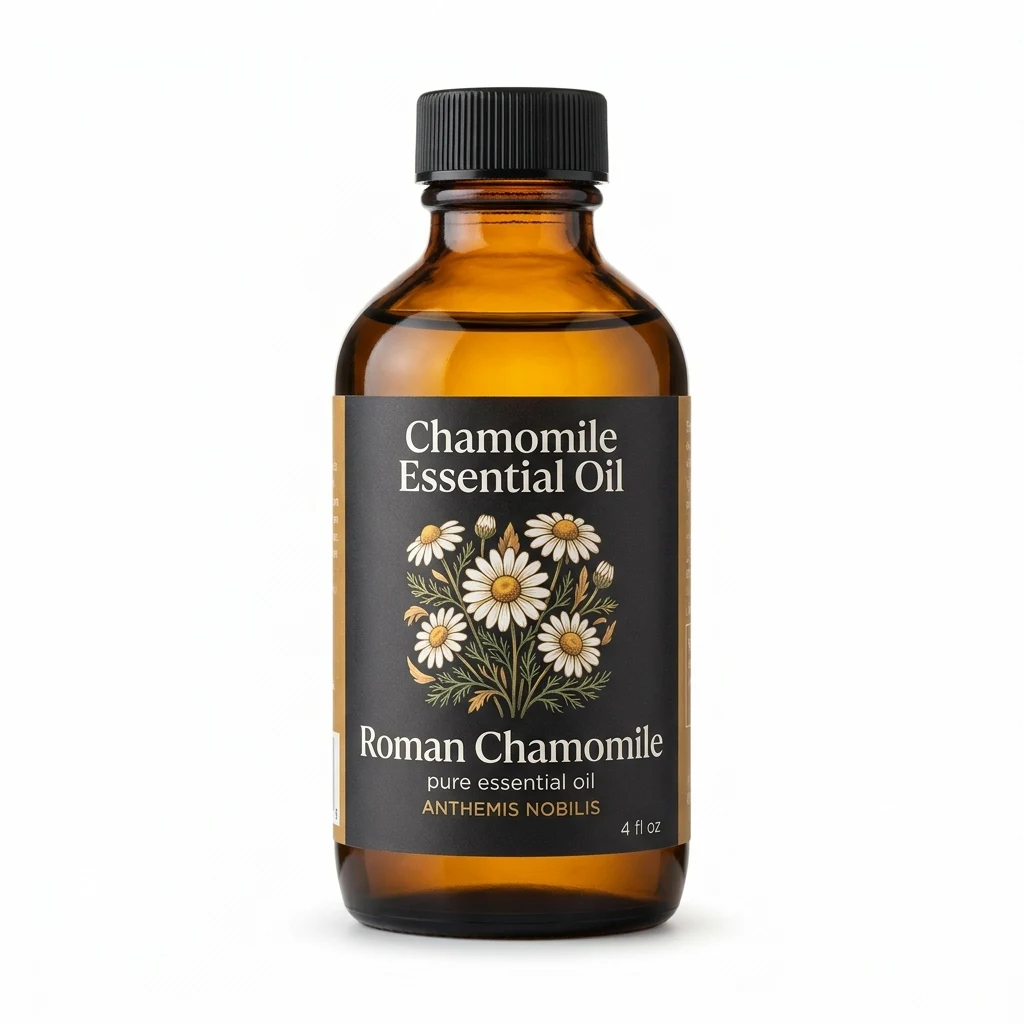
Roman Chamomile Essential Oil
Our own Roman Chamomile Essential Oil, in sizes from 0.5 oz to bulk.
From $32.99
Shop Now →Understanding Chamomile Oil: Roman vs. German
Before diving into recipes, it helps to know which type of chamomile oil you are working with. The two varieties sold most widely for cosmetic use are Roman chamomile (Anthemis nobilis or Chamaemelum nobile) and German chamomile (Matricaria chamomilla). They behave differently, and they look completely different in the bottle.
- Roman chamomile essential oil is pale yellow to clear with a sweet, fruity, herbaceous scent. It blends beautifully into facial serums and body oils.
- German chamomile essential oil is a deep, inky blue, thanks to a compound called chamazulene that forms during steam distillation. Even a small amount can tint a finished blend visibly. Its scent is earthier and more complex.
Both types are used cosmetically, but they are not interchangeable in every recipe. German chamomile's chamazulene content makes it the more visually dramatic choice and is often favored in formulations focused on sensitive or easily irritated skin. Roman chamomile tends to show up more in aromatherapy blends and lighter facial oils because of its softer scent profile.
For a broader overview of both varieties and their cosmetic applications beyond skin care, visit our guide on chamomile oil for skin and hair: the complete cosmetic care.
Chamomile Oil Skin Benefits: What Cosmetic Research Suggests
It is worth being clear about the language we use here. Chamomile essential oil is a cosmetic ingredient, not a drug. The observations below come from botanical research and long cosmetic tradition. They are starting points for your own exploration, not guaranteed outcomes.
- Softening and conditioning: Some research suggests that chamomile compounds may support the appearance of softer, more comfortable skin when used in diluted topical blends.
- Soothing sensation: People with easily flushed or reactive-feeling skin often report that properly diluted chamomile oil blends contribute to a calmer, more settled skin feel after use.
- Scent and atmosphere: The aromatic profile of chamomile, particularly Roman chamomile, is widely associated with calm evening rituals and gentle wind-down routines. This is one of its most consistent cosmetic assets.
- Antioxidant constituents: Chamomile contains flavonoids including apigenin. Some research explores the antioxidant properties of these compounds in topical contexts, though results vary.
Chamomile oil skin benefits are real in a cosmetic sense. They show up in texture, scent, and the overall sensory quality of a well-made blend. Approach them with curiosity rather than certainty, and let your own experience guide you.
Safety First: Dilution and Patch Testing
Essential oils are highly concentrated plant extracts. Chamomile essential oil benefits for skin are best accessed through proper dilution in a carrier oil or unscented base. Applying undiluted essential oil directly to skin is not recommended and can cause irritation or sensitization over time.
Standard Dilution Guidelines
| Use Context | Recommended Dilution | Drops per 1 oz (30 ml) Carrier |
|---|---|---|
| Facial application (sensitive skin) | 0.5% to 1% | 3 to 6 drops |
| General facial use | 1% to 2% | 6 to 12 drops |
| Body oil or lotion | 2% to 3% | 12 to 18 drops |
| Spot application (small areas only) | Up to 3% | Up to 18 drops |
For a detailed walkthrough of carrier oil selection and dilution math, see our full guide on how to dilute chamomile essential oil with carrier oils.
Patch Testing Steps
- Mix a small amount of your intended blend at the planned dilution rate.
- Apply a few drops to the inside of your forearm or behind your ear.
- Leave it undisturbed for 24 hours without washing.
- Check for redness, itching, or unusual sensation. If any of these occur, rinse thoroughly and discontinue use of that blend.
- If no reaction occurs, proceed with your full skin application.
Important: People with known sensitivities to plants in the Asteraceae family (which includes ragweed, marigold, and daisy) may also react to chamomile. Consult a qualified healthcare provider before use if you have any plant-related sensitivities or if you are pregnant or nursing.
Simple Chamomile Oil Blends for Skin: Step-by-Step Recipes
The following recipes are designed to be practical and repeatable. Each one uses ingredients that are widely available and straightforward to source. Start with small batches until you find the formulations your skin responds to best.
Recipe 1: Everyday Chamomile Facial Oil
This is a lightweight facial oil suited to an evening wind-down routine. It layers well under a moisturizer or can be used alone on cleansed skin.
Materials Needed
- 1 oz (30 ml) dark glass dropper bottle
- 1 oz jojoba oil (a stable, non-comedogenic carrier that mimics skin's natural sebum)
- 6 drops Roman chamomile essential oil (for a 1% dilution)
- 4 drops lavender essential oil (optional, for added calm-evening scent)
- Small funnel
- Label and marker
Steps
- Prepare your workspace. Wipe down your surface with a clean cloth. Gather all materials before you begin. Working with a clean surface reduces the risk of contaminating your finished oil.
- Measure your carrier oil. Using a small measuring cup or syringe, pour 1 oz of jojoba oil into your glass bottle via the funnel.
- Count your drops carefully. Holding the essential oil bottle vertically, let drops fall one at a time directly into the jojoba. Count aloud: 6 drops of Roman chamomile, then 4 drops of lavender if using.
- Cap and roll to blend. Secure the dropper cap and gently roll the bottle between your palms for 30 seconds. Do not shake vigorously. Rolling achieves an even blend without introducing too much air.
- Label immediately. Write the date, ingredients, and dilution percentage on the label. Essential oils degrade over time, and tracking the date helps you know when to refresh your blend.
- Patch test before first use (see testing steps above).
- To use: After cleansing and toning in the evening, warm 3 to 5 drops between your fingertips and press gently into skin. Follow with moisturizer if desired.
Expected sensory experience: People who use this blend regularly often report that the soft, floral scent supports a settled, unhurried feeling at the end of the day. Skin may appear more comfortable and luminous with consistent use over several weeks, though individual results vary.
Recipe 2: Chamomile and Oat Body Oil for Dry Skin
A richer blend designed for the body, this oil pairs chamomile with oat-derived squalane for an extra layer of skin-softening texture. It works well applied after a warm shower, while skin is still slightly damp.
Materials Needed
- 2 oz (60 ml) amber glass bottle with pump or dropper
- 1 oz sweet almond oil
- 1 oz squalane (plant-derived, from sugarcane or olives)
- 12 drops German chamomile essential oil
- 6 drops frankincense essential oil (optional, for a grounding, resinous note)
Steps
- Combine your carriers. Pour both sweet almond oil and squalane into your 2 oz bottle. Together they create a blend that absorbs relatively quickly and leaves a pleasant, non-greasy finish.
- Add German chamomile drops. Note that German chamomile's deep blue color will be visible in the finished oil. This is normal and expected. It may leave a very faint blue tint on skin initially, which fades quickly.
- Add optional frankincense. This softens the earthy, slightly medicinal edge of German chamomile and gives the blend a warmer, more complex aroma.
- Roll to blend and label. Follow the same rolling and labeling method described in Recipe 1.
- To use: Pump or drop a small amount into palms and apply to damp skin after bathing. Pay particular attention to areas that feel dry or rough, such as elbows, shins, and heels.
Common mistake to avoid: Using too much product at once. With body oils, a little goes a long way. Start with 4 to 6 drops for the full body and add more only if skin absorbs it quickly.
Recipe 3: Simple Chamomile Compress for a Calm Evening Ritual
This is not a leave-on oil but a brief skin ritual that some people incorporate into a wind-down routine before bed. It uses chamomile hydrosol (also called floral water) rather than the essential oil itself, making it appropriate for those who want a gentler, more watered-down option.
Materials Needed
- 1 cup warm (not hot) water
- 2 tablespoons Roman chamomile hydrosol
- Soft muslin or cotton cloth
Steps
- Combine warm water and chamomile hydrosol in a clean bowl.
- Submerge the cloth, then wring it out until damp but not dripping.
- Rest the cloth gently over cleansed face and neck for 3 to 5 minutes.
- Follow with your regular facial oil or moisturizer while skin is still slightly warm.
This compress ritual is particularly popular among people who find that a moment of warmth and botanical scent helps them transition from a busy day to a calmer evening atmosphere.
Tips and Common Mistakes to Avoid
Sourcing Quality Chamomile Oil
Chamomile oil benefits for skin depend significantly on the quality of the oil you start with. Look for suppliers who provide gas chromatography (GC/MS) testing reports, clearly state the botanical Latin name, and list the country of origin. Roman chamomile is commonly sourced from England, France, and Bulgaria. German chamomile is often produced in Egypt, Hungary, and Central Europe.
Avoid oils sold in clear glass or plastic bottles. Both light and reactive packaging degrade essential oils more quickly than amber or cobalt glass.
Mistakes That Reduce Blend Quality
- Skipping the math: Always calculate your dilution percentage before combining ingredients. Guessing drop counts leads to inconsistent, sometimes over-concentrated blends.
- Using old carrier oils: Carrier oils go rancid. Smell your jojoba, sweet almond, or squalane before using them. A crayon-like or sharp smell signals oxidation. Rancid carriers can irritate skin regardless of the essential oil added.
- Storing blends near heat or light: Keep finished blends in a cool, dark cabinet. A bathroom shelf near a shower is not ideal due to humidity and heat exposure.
- Expecting immediate dramatic results: Cosmetic botanical oils work gradually. Most people who notice positive changes report them after consistent use over three to six weeks.
Who Should Exercise Extra Caution
Chamomile is generally considered one of the gentler essential oils for cosmetic use, but it is not universally appropriate. Children under two, people with known plant-family sensitivities, and those who are pregnant or nursing should consult a qualified healthcare provider before incorporating chamomile essential oil into their skin care routines. Always err on the side of lower dilutions when starting out.
Expanding Your Chamomile Practice
Chamomile oil's cosmetic reach extends beyond the face and body. Many people use chamomile-infused blends as part of a broader botanical hair care routine, particularly for scalp comfort and shine. If you are curious about those applications, our guide on chamomile oil for hair softness, shine, and gentle scalp care covers the subject in practical detail.
Working with chamomile oil rewards a slow, attentive approach. Quality sourcing, careful dilution, and consistent use over time give you the best chance of experiencing what this remarkable botanical ingredient genuinely has to offer. Start with one blend, take notes on how your skin responds, and adjust from there.