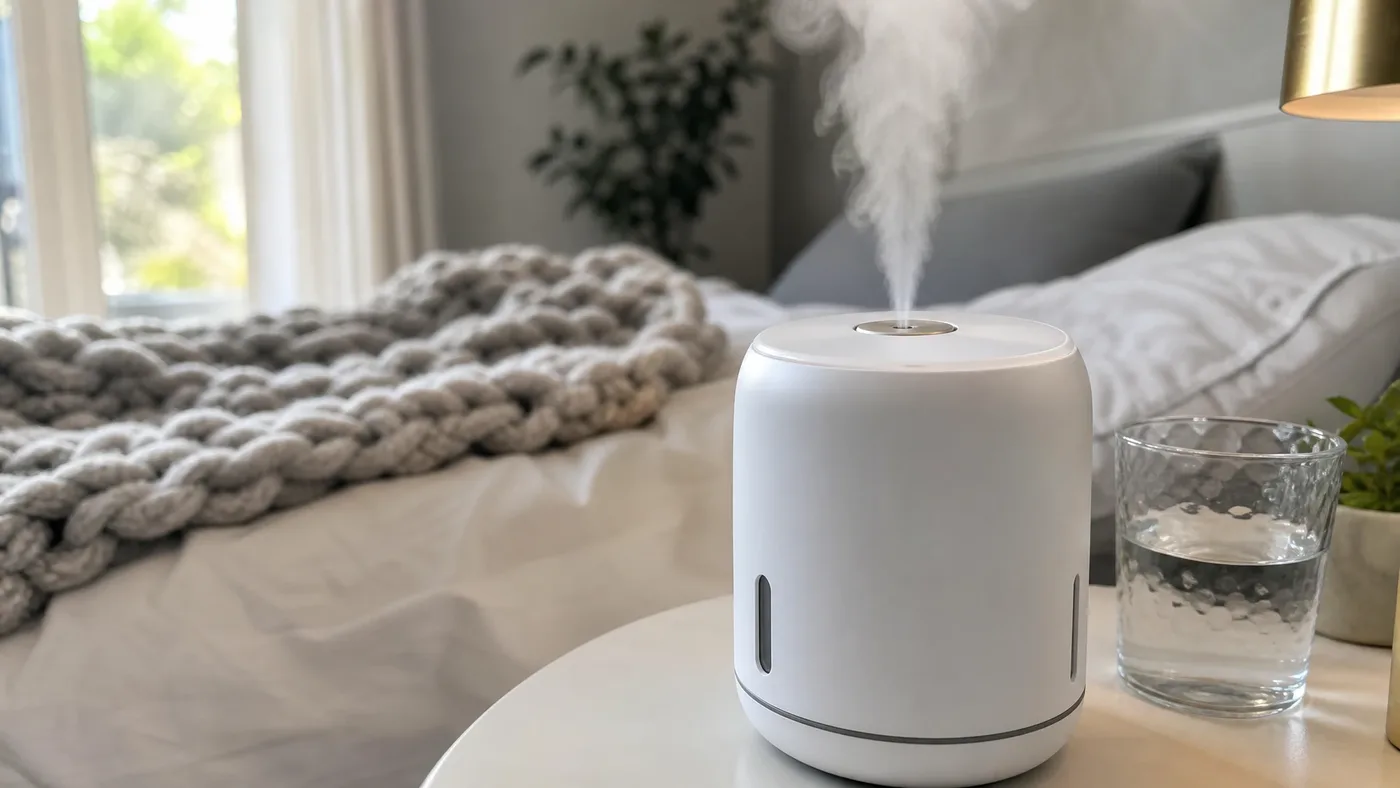
Can You Put Chamomile Oil in a Humidifier? Check the Manual
Not in the water tank, unless your own manual says it is allowed. Both manuals we read say no to oil in the tank, and both give oil a separate place: a pad in one, a small cup in the other. If you have an ultrasonic or cool mist unit with no such compartment, the answer is simply no.
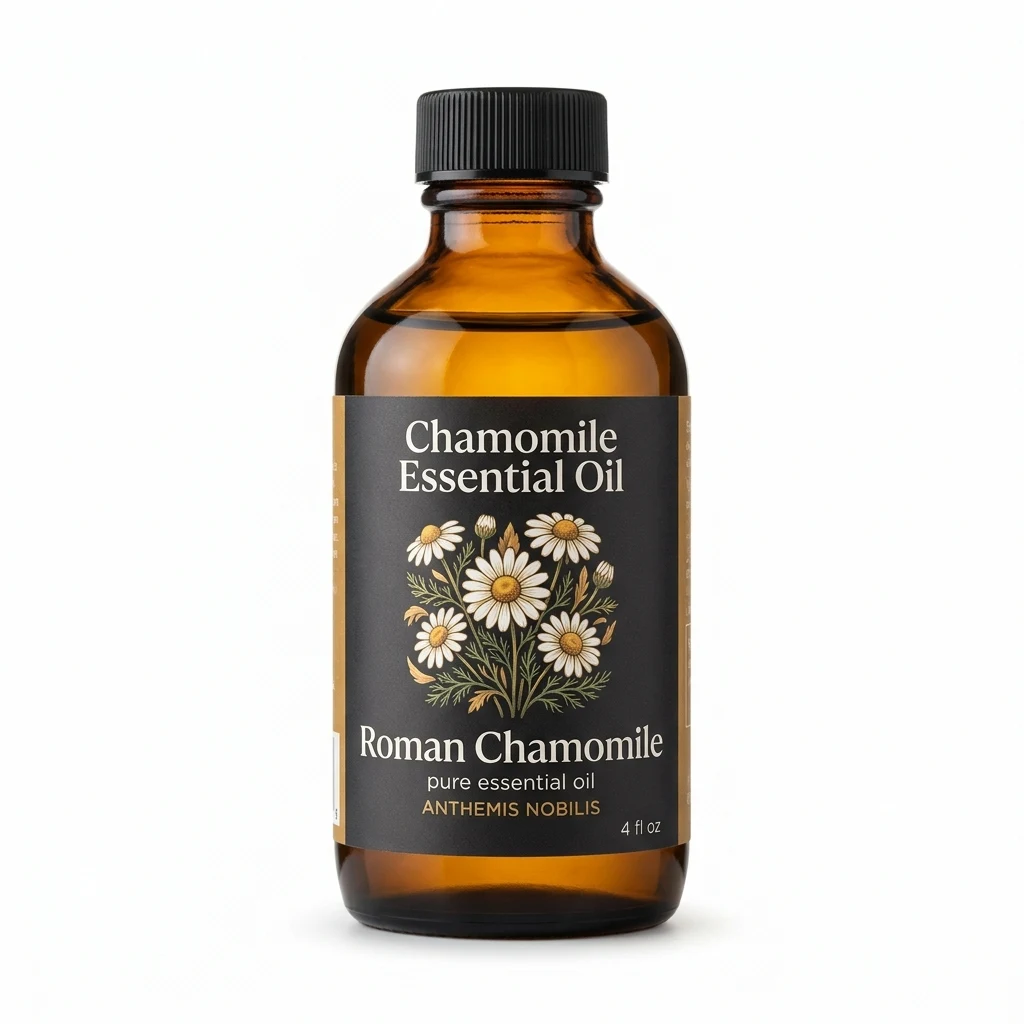
Roman Chamomile Essential Oil
Our own Roman Chamomile Essential Oil, in sizes from 0.5 oz to bulk.
From $32.99
Shop Now →What the manuals actually say
We read two. The first is the Levoit Classic 200 ultrasonic manual: "Do not add essential oils, supplemental water treatment liquids, or water filters into the water tank or base chamber. This will damage the humidifier and cause leaks. Only add essential oils to the aroma pad." Its instructions for the pad call for 2 to 3 drops of oil. The second is a Vicks Warm Mist manual published by Kaz USA, which says not to add essential oils or medications to the chimney, reservoir or water tank, and that doing so "could cause damage to the humidifier and void the warranty." The same manual then says the medicine cup "can also be used with essential oils", a few drops, and "never" in the tank or reservoir.
Two manuals do not cover every machine, and both are for specific models, so the real rule is to find yours. The pattern is consistent, though: the tank is for water, and any oil goes into the one compartment the maker designed for it. We did not find a source that explains the plastic damage mechanism in detail, so we will not invent one. The manuals state the consequence (damage, leaks, a voided warranty) and that is enough to decide.
Which kind of machine you own matters
- Ultrasonic cool mist. A vibrating plate turns tank water into mist. The EPA's Use and Care of Home Humidifiers says ultrasonic and impeller (cool mist) humidifiers can disperse materials from their tanks into indoor air, and are very efficient at dispersing minerals in tap water. Anything you put in that water, including oil, goes through the same route.
- Warm mist. A heating element boils the water. The Vicks manual we read puts the oil in the medicine cup above the mist chimney, not in the water, and warns that steam can cause burns.
- Dedicated aroma diffuser. A different appliance, built for oil. Our chamomile diffuser blends post covers it. We do not sell diffusers or humidifiers, so we cannot say which machine suits you.
The hygiene point comes first
The EPA says to clean portable humidifiers every third day, and to empty the tank, dry the surfaces and refill with fresh water each day. It recommends low-mineral water such as distilled, and notes that bottled waters labelled spring, artesian or mineral have not been treated to remove minerals. Adding scent does not replace any of that. If you are not cleaning the machine on that schedule, the larger question is the mist, not the fragrance. The EPA page does not mention adding scents or fragrances to humidifier water at all, so on this question the EPA gives no guidance either way. The manual is the only authority on your machine.
Doing the small sums, and cleaning up after
At the roughly 20 drops per ml that our German oil page's dilution figures imply (3 to 12 drops per ounce for 0.5% to 2%), Levoit's 2 to 3 drops on the pad is 0.1 to 0.15 ml of oil per session. That is a small volume, and it is the manufacturer's figure for an unspecified oil, not something specific to chamomile. If you have to guess, guess low: the pad is a small absorbent surface, and extra drops do not make a bigger room scent, only a wetter pad.
Cleaning is part of the deal. Levoit's troubleshooting section says that if oil was placed on the pad and the unit smells odd, rinse the pad under clean water and let it dry. The Vicks manual says some residue from inhalant may be left in the medicine cup and to wipe it out only after the unit is off, unplugged and cooled for at least 20 minutes. The same Vicks manual warns against placing its scent pad on furniture, fabric, bedding or plastic. Our site says the German oil will stain pale fabric, so reasoning from both, keep oil-wet pads and spilled drops away from curtains and bedding.
How long to run it
The American Lung Association post says prolonged exposure to high concentrations of essential oils is associated with heart and lung symptoms, and it cites a 2022 study of 200 people in which those who inhaled essential oils for an hour or more per day had increased heart rate and blood pressure and decreased lung function. We did not read that study ourselves, so we are passing along the ALA's report of it, not confirming it. Reasoning from this, running a scented humidifier all night in a closed bedroom is the pattern least supported by anything we found. Shorter sessions, an open door and fresh air are the conservative choice.
Breathing and asthma
The American Lung Association's blog post "Essential Oils: More Harmful Than Helpful?" (published January 2024, updated October 2025) says inhaling essential oils directly can irritate the respiratory tract and that certain oils can trigger asthma symptoms in sensitive people. For diffusers, it advises a well ventilated space, and its bottom line is that adding anything, including essential oils, to the air you breathe is not recommended. That is a blog post, not a trial, and it comes from a patient organisation with a cautious stance, so weigh it as such. It does mean that if you or someone in the house has asthma or COPD, the person to ask is your physician or pulmonologist, before the first session.
Chamomile is also in the daisy family. Our Inside the Still page carries a ragweed and Asteraceae caution, so anyone with that allergy history should ask an allergist first.
Pets, babies and bedrooms
We sell oil for adults and we are not the right source on babies or animals. For babies and young children, ask a pediatrician before putting any oil near a nursery humidifier. For animals, our live posts cover cats and dogs, and a veterinarian is the person to ask about your own animal.
What we would do
If you want chamomile scent in a room, reasoning from the manuals above, the lower-risk route is a few drops on the pad or in the cup your machine provides, or a separate diffuser meant for oil. If your machine has neither, leave the oil out of it and keep the humidifier doing the one thing the EPA guidance covers, which is adding moisture to air.
The drop count is the manufacturers' to set: Levoit says 2 to 3 for its pad. For the undiluted bottle, that means counting drops from the bottle yourself. When you have a machine and a manual in hand, our inhalation post covers breathing the oil from a personal inhaler instead, which avoids the machine altogether.
Roman Chamomile Essential Oil
Roman Chamomile Essential Oil from our own shop, in sizes from 0.5 oz to bulk.
From $32.99
Shop Now →Sources & Further Reading
- Levoit (Arovast Corporation). Classic 200 Ultrasonic Cool Mist Humidifier user manual. levoit.com (Classic 200 manual PDF)
- Kaz USA. Vicks Warm Mist Humidifier instruction manual. pdf.lowes.com (Vicks warm mist manual)
- US EPA. Use and Care of Home Humidifiers. epa.gov/indoor-air-quality-iaq/use-and-care-home-humidifiers
- American Lung Association, 2024 (updated 2025). Essential Oils: More Harmful Than Helpful? lung.org/blog/essential-oils-harmful-or-helpful